- Chapter Books
- Ages 7–11
- Fantasy
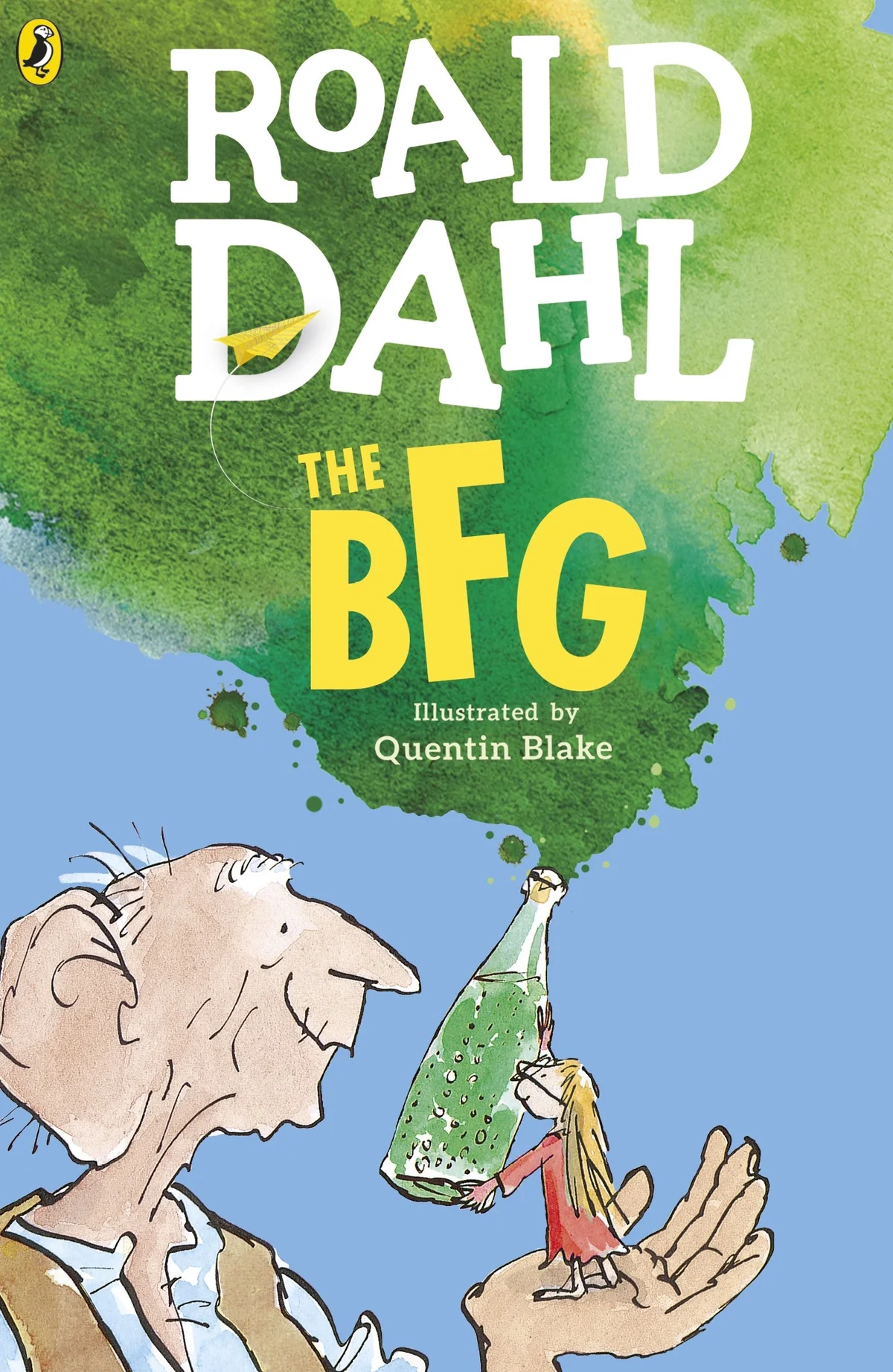
The BFG
Affiliate links — buy through these retailers and we earn a small commission, at no extra cost to you.
Part of the Roald Dahl universeOpen the collection
A warm, strange and beautifully read-aloud Dahl classic about a lonely girl and a gentle giant. The dream-catching language is magical, but the child-eating giants and night-time abduction make it more frightening than a purely cosy fantasy.
- Best for7–11
- FormatChapter
- Length224 pp
- Read aloud~3 hr10 min
Affiliate links — buy through these retailers and we earn a small commission, at no extra cost to you.
The vibe
What it’s like.
Style
- Comedic
- Literary
- Onomatopoeic
Tone
- Whimsical
- Funny
- Heartwarming
- Adventurous
- Scary
Themes
Experience meters
What’s it about?
The story.
Sophie is awake during the witching hour when she sees a giant outside her window. The giant carries her away to Giant Country, but he is not like the others. He is the BFG: the Big Friendly Giant, a gentle, muddled speaker who catches dreams and refuses to eat children. The other giants, however, are enormous, cruel and hungry, and Sophie soon realises that stopping them will require courage, cleverness and a visit to the Queen. The BFG is one of Dahl's most affectionate fantasies, full of invented language, dream magic and the tender friendship between a vulnerable child and an outsider adult. Quentin Blake's illustrations keep the strangeness light, but the premise still contains real night-time fear. It is a wonderful read-aloud for children who can handle some giant-sized scariness.
“Sophie couldn't sleep. A brilliant moonbeam was slanting through a gap in the curtains.”
Fit check
Right for your child?
Where it lands by age
- 1
- 3
- 5
- 7
- 9
- 11
- 13
- Best fit · 7–11
- Read aloud · 6–11
- Independent · 7–11
Prose load
Moderate
Visual support
Moderate
Reluctant-reader friendly
Very
Read-aloud quality
Excellent
Works well for
- Reading aloud
- Gift-buying
- Reluctant readers
Preview before sharing if a child is sensitive to: scary imagery, violence, abandonment.
Bedtime suitability
3 / 5 · Workable
Sensitive-child
3 / 5 · Mostly fine
Graphic intensity
2 / 5 · Mild
Best for
- Read aloud classic
- Gentle giant
- Invented language
- Dream magic
- Unlikely friendship
Avoid if
- Sensitive to child abduction
- Sensitive to child eating references
- Needs gentle bedtime
- Avoids dated classics
Particularly good for children who are…
- Nightmares or fears
- Anxiety and worry
- Low self esteem
In the classroom
How it works in school.
Roald Dahl's tender, hilarious giant story — a magnificent class read-aloud, brilliant for playing with invented words (gobblefunk) and talk about friendship.
A book children love that happens to support school — never a stand-in for the texts a class is taught with. Reviewed for the classroom · June 2026.
Why it lands
Why they love it.
Why kids love it
The specific joy is the BFG's language — Snozzcumbers, Whizzpoppers, words a seven-year-old has never heard but instantly understands. The dream-catching is the magic; the unlikely friendship between a tiny orphan and an enormous gentle giant is the heart. The Dahl for read-aloud parents who like proper inventing-language fun.
- Having a wise mentor
- Secret world
- Making a difference
- Friendship and belonging
- Surviving danger
Why parents love it
The Dahl built for reading aloud — Snozzcumbers, Whizzpoppers, Frobscottle, all begging to be said with the right voice. Dream-catching premise sustained across the whole book; Quentin Blake's BFG is iconic. Read at the right age, seven to ten, it becomes one of those books a child returns to as an adult.
- Beloved classic
- Great writing
- Shared humour
- Bedtime appropriate
About the creators
About the creators.
If you liked this
Three ways out of this book.
If you liked this, try…
Lateral matches. Same shelf, different texture.
Come into this from…
Easier or preparing reads — perfect lead-ins.
Where to go next…
Escalation reads — a step up in scale, silliness, or stakes.
Where you’ll find it