- Graphic Novels
- Ages 6–10
- Comedy
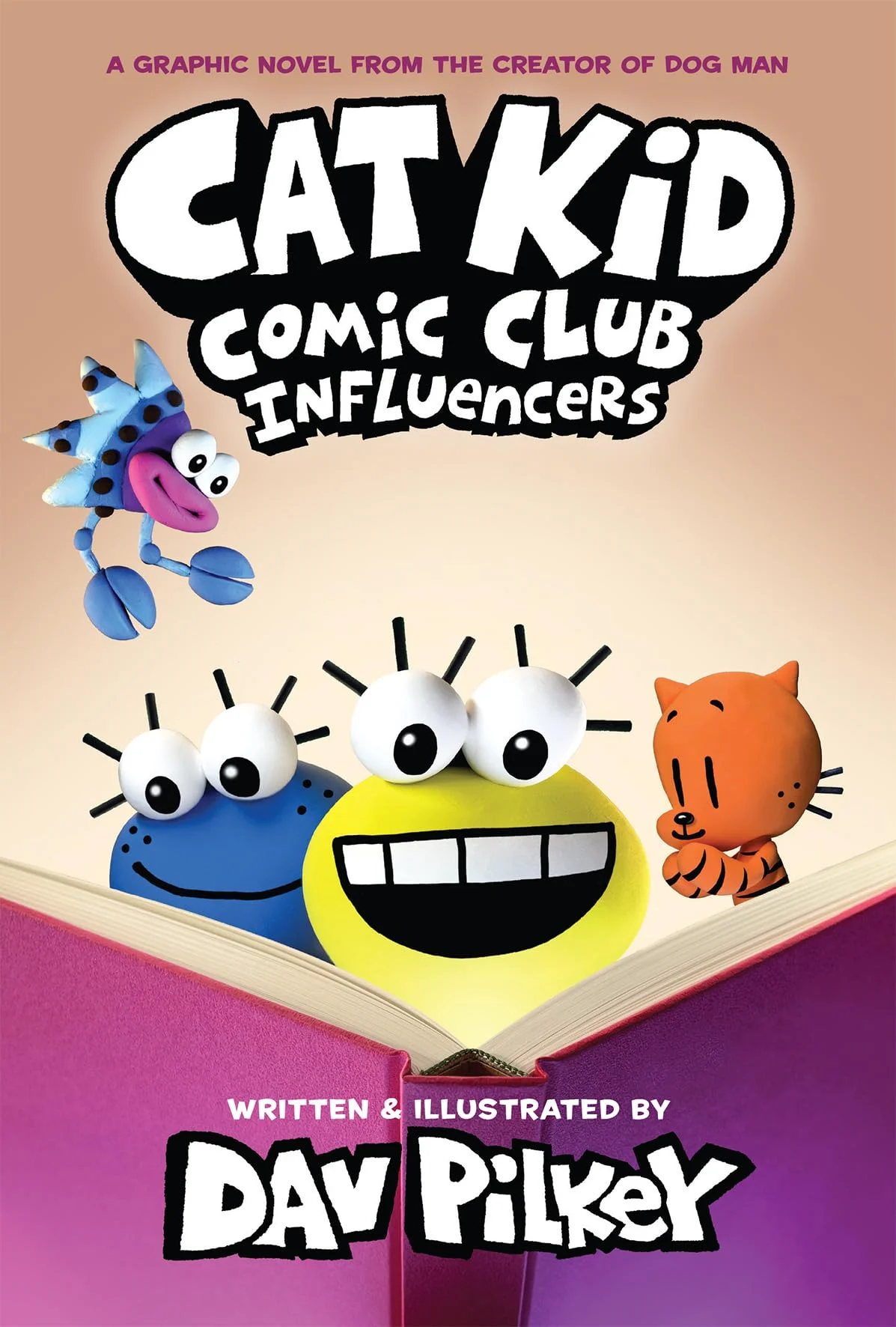
Cat Kid Comic Club: Influencers
Affiliate links — buy through these retailers and we earn a small commission, at no extra cost to you.
Book 5 in Cat Kid Comic ClubView the full series
Part of the Dog Man universeOpen the collection
Outside voices arrive in the comic club, and the frogs have to decide whose creative work they're doing, their own, or someone else's idea of what their work should be. Pilkey's most contemporary entry and the one that speaks most directly to children growing up with social media around them.
- Best for6–10
- FormatGraphic
- Length224 pp
- Read aloud~1 hr45 min
Affiliate links — buy through these retailers and we earn a small commission, at no extra cost to you.
The vibe
What it’s like.
Style
- Comedic
- Conversational
- Onomatopoeic
- Literary
Tone
- Funny
- Silly
- Warm
- Heartwarming
- Absurdist
- Irreverent
- Thought provoking
Themes
- Creativity and imagination
- Identity
- Perfectionism and pressure
- Self acceptance
- Fairness and justice
- Responsibility
Experience meters
What’s it about?
The story.
Influencers introduces something the earlier books in the series deliberately excluded: the outside world's opinion of the frogs' creative work. The frogs encounter influences, characters or forces that want to shape what they make and how, and the question becomes whether a creative voice is still your own once external pressures start shaping it. The identity and self_acceptance deep themes (both at 0.75) are the most prominent since the first book, and they operate at a different level now: the frogs know who they are as artists, and the challenge is defending that. The thought_provoking tone (replacing inspirational from the earlier books) signals a shift in register; this is the most sceptical entry in the series. Pilkey handles the social-media-adjacent themes without sermonising, the comedy stays intact, and the frogs are as chaotic as ever, but there is a genuine argument being made about authenticity and audience that children will feel without necessarily naming. The discovery plot engine captures it: what they discover is something about themselves that the influences almost obscured. The most relevant for parents to read alongside, and the best conversation-starter in the series.
Fit check
Right for your child?
Where it lands by age
- 1
- 3
- 5
- 7
- 9
- 11
- 13
- Best fit · 6–10
- Read aloud · 5–9
- Independent · 6–10
Prose load
Light
Visual support
Very high
Reluctant-reader friendly
Very
Read-aloud quality
Strong
Works well for
- Reading aloud
- Reluctant readers
Nothing in the book is likely to concern most parents. Safe to recommend without preview.
Bedtime suitability
3 / 5 · Workable
Sensitive-child
4 / 5 · Good fit
Graphic intensity
1 / 5 · None
Best for
- Reluctant readers
- Budding artists
- Social media conversations
- Dog man fans
- Discussion starter
Avoid if
No common reasons to avoid this one — a rare clean sweep on the sensitivity flags.
Particularly good for children who are…
- Reluctant reader
- Interested in art and creativity
- Struggling with reading
- Low self esteem
- Making friends
In the classroom
How it works in school.
A funny, creative comic series that actively inspires children to make their own comics and stories — a reluctant-reader favourite with real creative spark.
A book children love that happens to support school — never a stand-in for the texts a class is taught with. Reviewed for the classroom · June 2026.
Why it lands
Why they love it.
Why kids love it
The specific recognition is making something for an audience — the moment a creative kid starts wondering what other people will think before they finish the work. The frogs' attempts to go viral are the joke, but a seven-year-old who's seen siblings or parents chase likes gets the message about authenticity without being lectured.
- Friendship and belonging
- Being special or chosen
- Trickery and cleverness
Why parents love it
The Cat Kid most engaged with the realities of growing up with social media — the frogs discover online fame and start making comics for likes instead of themselves. Pilkey handles it without sermon. The conversation-starter book in the series for the screen generation. Best after the earlier Cat Kids.
- Shared humour
- Conversation starter
- Quick to read
- Educational for adult too
In the series
Cat Kid Comic Club.
5 books · open the series →
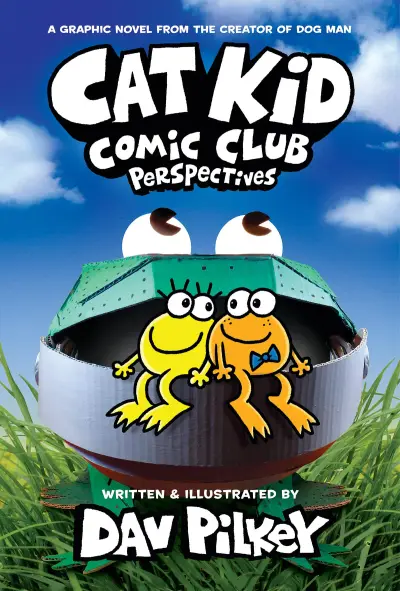
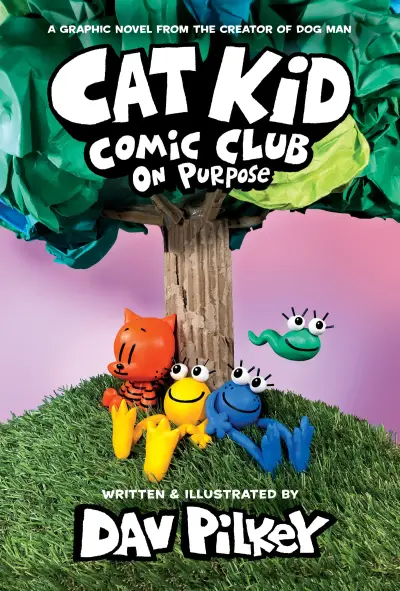
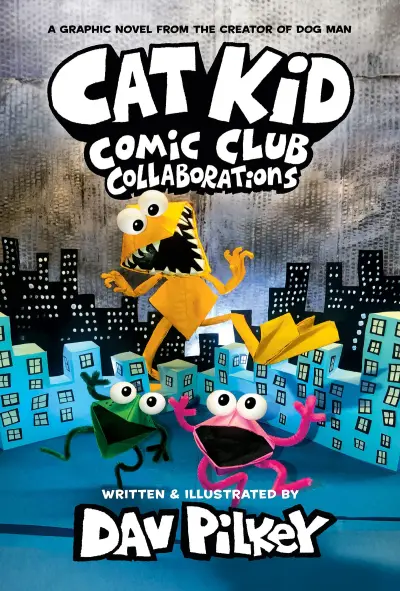
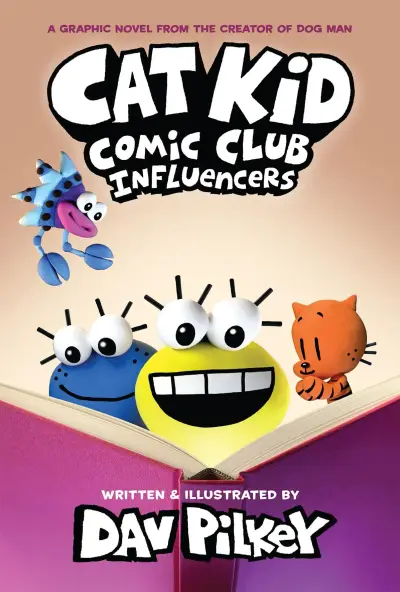
About the author & illustrator
Dav Pilkey.
If you liked this
Three ways out of this book.
If you liked this, try…
Lateral matches. Same shelf, different texture.
Come into this from…
Easier or preparing reads — perfect lead-ins.
Where to go next…
Escalation reads — a step up in scale, silliness, or stakes.