- Picture Books
- Ages 3–6
- Comedy
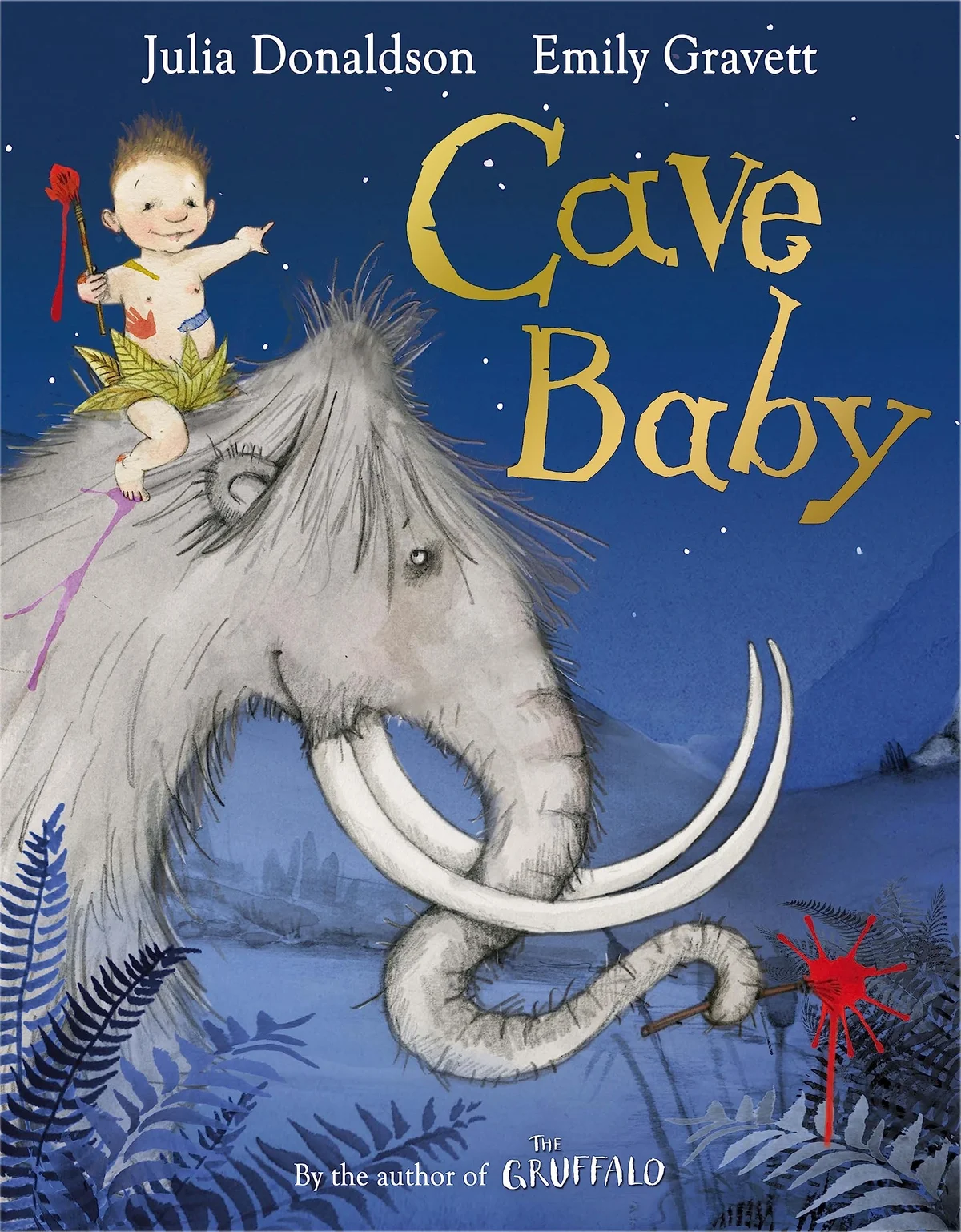
Cave Baby
Affiliate links — buy through these retailers and we earn a small commission, at no extra cost to you.
Part of the Julia Donaldson universeOpen the collection
A wilder, more art-led Donaldson picture book, lifted by Emily Gravett's lively prehistoric illustrations.
- Best for3–6
- FormatPicture
- Length32 pp
- Read aloud~6 min
Affiliate links — buy through these retailers and we earn a small commission, at no extra cost to you.
The vibe
What it’s like.
Style
- Rhyming
- Repetitive
- Conversational
- Comedic
Tone
- Funny
- Silly
- Adventurous
- Warm
- Whimsical
Themes
Experience meters
What’s it about?
The story.
Cave Baby lives in a cave with his mum, who paints beautifully, and his dad, who is very brave. Cave Baby has artistic ambitions too, but when he scribbles over the cave walls, his parents are not impressed. That night, a woolly mammoth carries him off through a moonlit prehistoric landscape filled with a sabre-toothed tiger, hyena, hare and maybe even a bear. The adventure gives Cave Baby a chance to see art, animals and imagination differently. Julia Donaldson's rhyming text has the familiar bounce of her best picture books, but Emily Gravett's illustrations make this feel more painterly, textured and creator-led than many of the Scheffler collaborations. It is funny and accessible, while also being a lovely celebration of children's messy mark-making and the idea that creativity may look chaotic before adults understand it.
Fit check
Right for your child?
Where it lands by age
- 1
- 3
- 5
- 7
- 9
- 11
- 13
- Best fit · 3–6
- Read aloud · 3–7
- Independent · 5–8
Prose load
Light
Visual support
Very high
Reluctant-reader friendly
Very
Read-aloud quality
Excellent
Works well for
- Reading aloud
- Bedtime
- Reading together
- Gift-buying
- Reluctant readers
Nothing in the book is likely to concern most parents. Safe to recommend without preview.
Bedtime suitability
4 / 5 · Bedtime-friendly
Sensitive-child
4 / 5 · Good fit
Graphic intensity
1 / 5 · None
Best for
- Prehistoric animals
- Messy creativity
- Art led picture book
- Mammoths
- Rhyming read aloud
Avoid if
- Very sensitive to night adventures
- Prefers realistic modern stories
Particularly good for children who are…
- Interested in art and creativity
- Reluctant reader
In the classroom
How it works in school.
A rhyming Donaldson romp — a join-in read-aloud, great for prediction and performing.
A book children love that happens to support school — never a stand-in for the texts a class is taught with. Reviewed for the classroom · June 2026.
Why it lands
Why they love it.
Why kids love it
The specific delight is the moonlit mammoth — Cave Baby in trouble for scribbling on his dad's cave paintings, then whisked off through the prehistoric landscape on a woolly mammoth, all the animals coming back home to be painted by morning. A three-year-old gets messy creativity vindicated.
- Adventure and freedom
- Animal companions
Why parents love it
The unusual Donaldson — collaboration with Emily Gravett instead of Scheffler, looser and more painterly. The book that turns toddler scribble-on-the-wall into a celebration of creativity. Strong for the two-to-four shelf when a child is just starting to make marks of their own.
- Beautiful illustrations
- Shared humour
- Conversation starter
- Bedtime appropriate
About the creators
About the creators.
If you liked this
Three ways out of this book.
If you liked this, try…
Lateral matches. Same shelf, different texture.
Come into this from…
Easier or preparing reads — perfect lead-ins.
Where to go next…
Escalation reads — a step up in scale, silliness, or stakes.