- Picture Books
- Ages 3–6
- Comedy
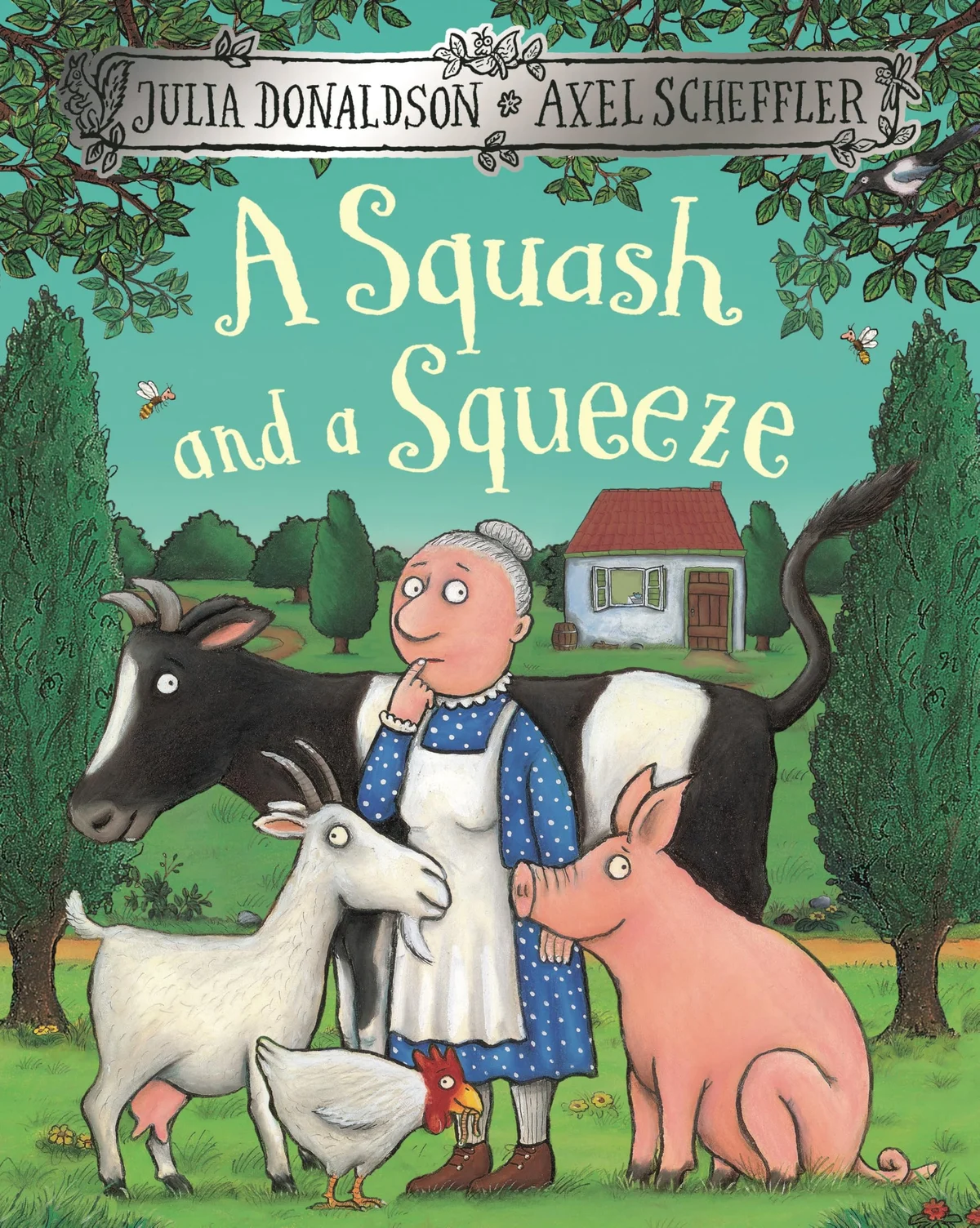
A Squash and a Squeeze
Affiliate links — buy through these retailers and we earn a small commission, at no extra cost to you.
Part of Julia Donaldson & Axel SchefflerView the full series
Part of the Julia Donaldson universeOpen the collection
A classic Donaldson/Scheffler farmyard farce about a little old lady who learns her tiny house feels much bigger once the chaos has gone.
- Best for3–6
- FormatPicture
- Length32 pp
- Read aloud~6 min
Affiliate links — buy through these retailers and we earn a small commission, at no extra cost to you.
The vibe
What it’s like.
Style
- Rhyming
- Repetitive
- Conversational
- Comedic
Tone
- Funny
- Silly
- Warm
- Gentle
- Cosy
Themes
Experience meters
What’s it about?
The story.
A little old lady thinks her house is far too small, so she asks a wise old man for help. His solution is not to build an extension, but to bring in a hen, a goat, a pig and a cow until the house becomes a ridiculous squash and squeeze. When the animals are sent back outside, the same little house suddenly feels wonderfully spacious. As the first picture-book collaboration between Julia Donaldson and Axel Scheffler, it has all the ingredients that later became their signature: strong rhyme, repetition, comic escalation and instantly readable illustrations. The story works especially well for very young children because the structure is clear, the animal noises are inviting, and the final lesson is simple but satisfying. It is about perspective, gratitude and the comic usefulness of making things temporarily much worse.
“A little old lady lived all by herself, with a table and a chair and a jug on the shelf.”
Fit check
Right for your child?
Where it lands by age
- 1
- 3
- 5
- 7
- 9
- 11
- 13
- Best fit · 3–6
- Read aloud · 2–6
- Independent · 5–7
Prose load
Light
Visual support
Very high
Reluctant-reader friendly
Very
Read-aloud quality
Excellent
Works well for
- Reading aloud
- Bedtime
- Reading together
- Reluctant readers
Nothing in the book is likely to concern most parents. Safe to recommend without preview.
Bedtime suitability
5 / 5 · Bedtime-friendly
Sensitive-child
4 / 5 · Good fit
Graphic intensity
1 / 5 · None
Best for
- Farm animals
- Funny read aloud
- Repetition
- Younger preschool
- Cosy bedtime
Avoid if
- Wants plot heavy adventure
- Prefers non rhyming books
Particularly good for children who are…
- Reluctant reader
In the classroom
How it works in school.
A rhyming, cumulative read-aloud children chant along to — ideal for prediction, sequencing and performing aloud.
A book children love that happens to support school — never a stand-in for the texts a class is taught with. Reviewed for the classroom · June 2026.
Why it lands
Why they love it.
Why kids love it
The pleasure for two- and three-year-olds is knowing what's coming next. Once the hen's in the house, they're waiting for the goat — and they're right. The animals get bigger, the house gets sillier, and a small child gets to be the one who already knows how it ends.
- Family belonging
- Trickery and cleverness
Why parents love it
The book that hands a tired parent a foolproof read-aloud — a clear pattern, predictable noises a small child will shout for you, and a four-minute arc that lands cleanly enough to be the closing book of the evening. The earliest Donaldson-Scheffler collaboration, and the one most worth owning for a toddler bookshelf.
- Shared humour
- Bedtime appropriate
- Quick to read
- Nostalgia
In the series
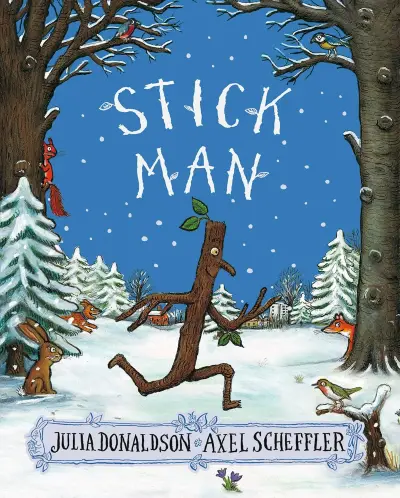
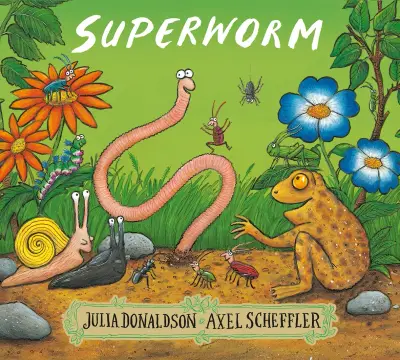
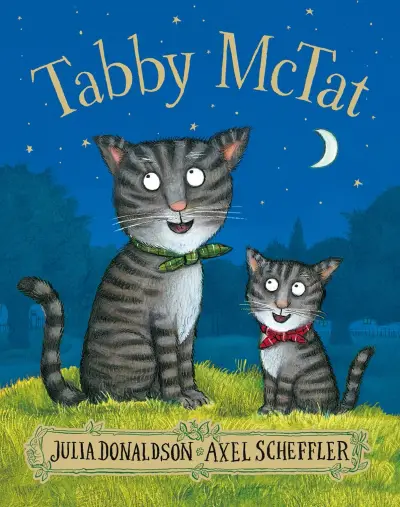
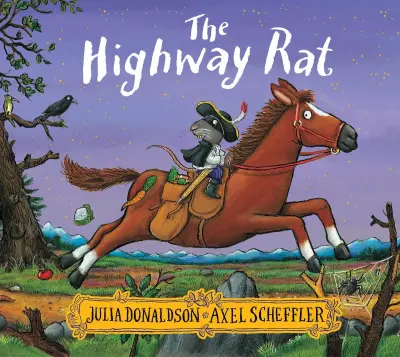
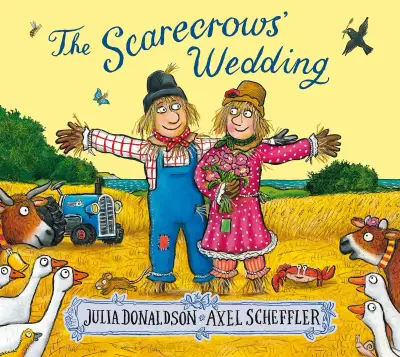
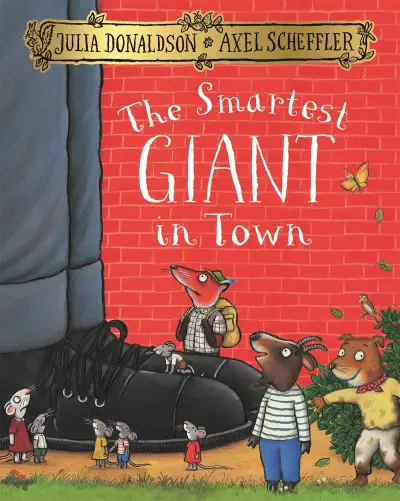
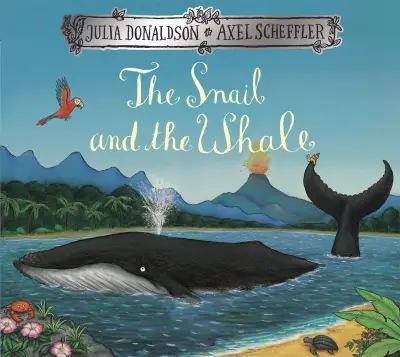
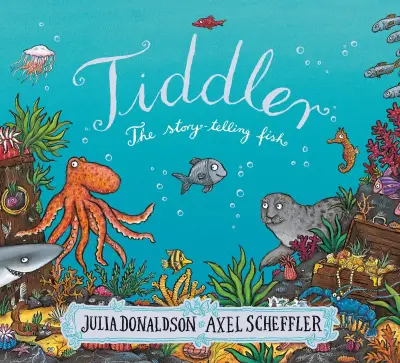
Julia Donaldson & Axel Scheffler.
14 books · open the series →
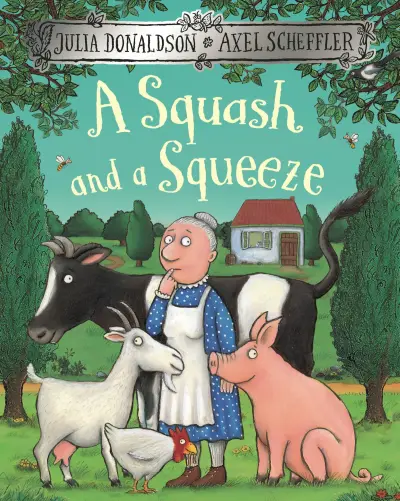
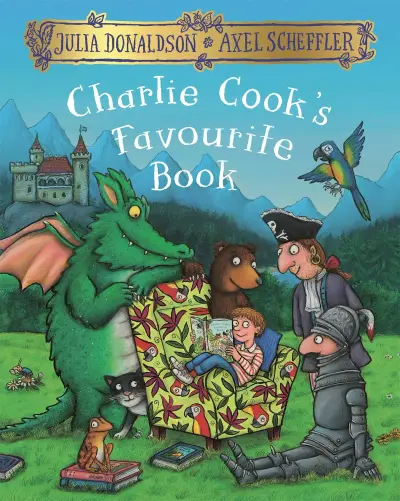
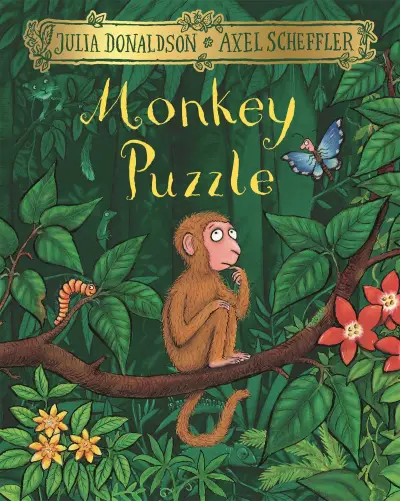
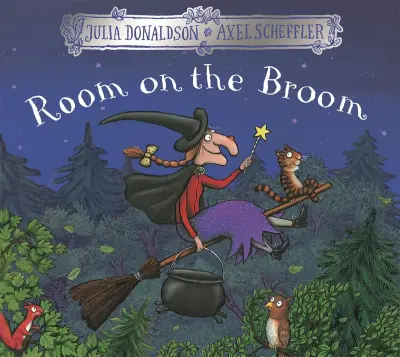
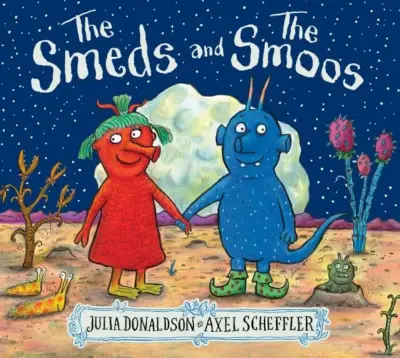
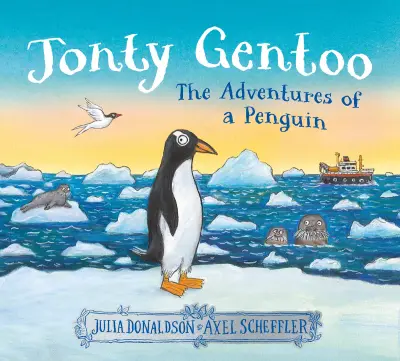
About the creators
About the creators.
If you liked this
Three ways out of this book.
If you liked this, try…
Lateral matches. Same shelf, different texture.
Come into this from…
Easier or preparing reads — perfect lead-ins.
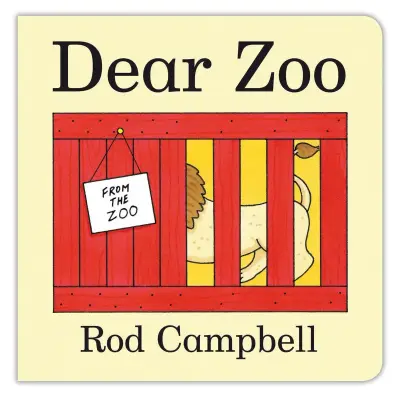
Where to go next…
Escalation reads — a step up in scale, silliness, or stakes.
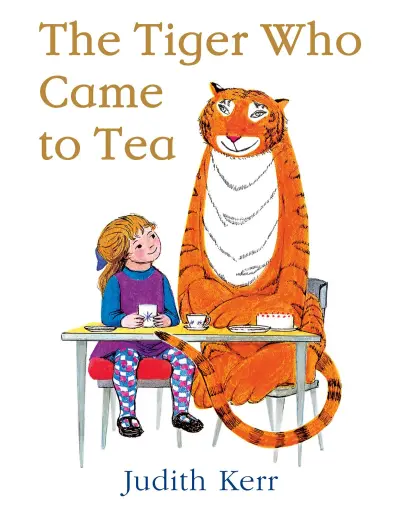
More like this…
Books that share themes and topics with this one.