- Graphic Novels
- Ages 8–12
- Contemporary
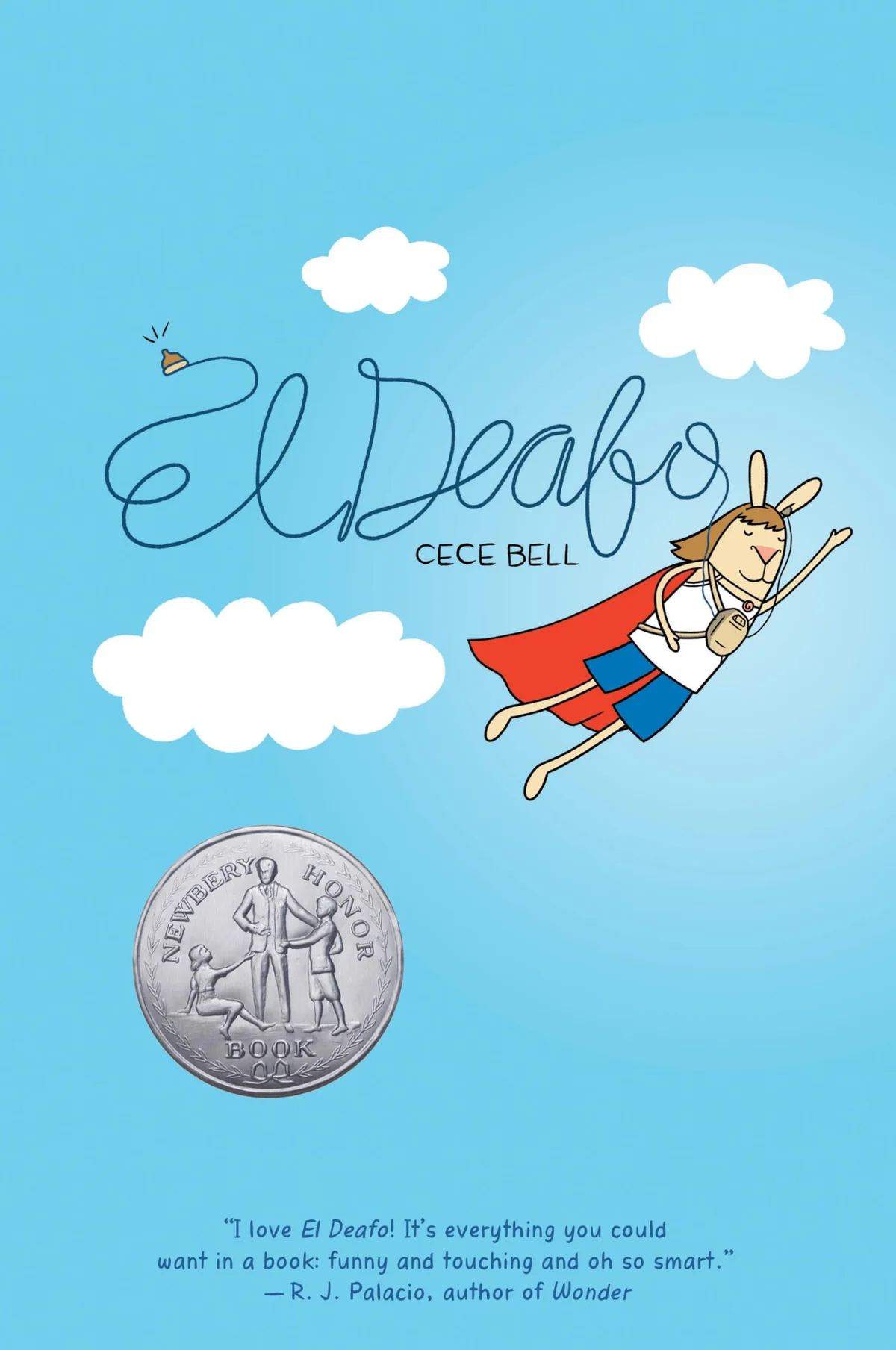
El Deafo
Affiliate links — buy through these retailers and we earn a small commission, at no extra cost to you.
A funny, generous and hugely important graphic memoir about growing up deaf and finding confidence. Essential for middle-grade graphic-novel shelves and one of the best empathy-building comics for children.
- Best for8–12
- FormatGraphic
- Length248 pp
- Read aloud~1 hr55 min
Affiliate links — buy through these retailers and we earn a small commission, at no extra cost to you.
The vibe
What it’s like.
Style
- Conversational
- Comedic
Tone
- Funny
- Warm
- Heartwarming
- Thought provoking
- Inspirational
Themes
Experience meters
What’s it about?
The story.
El Deafo is Cece Bell's graphic memoir of losing her hearing as a child, wearing a bulky Phonic Ear hearing aid and trying to navigate school, friendships, embarrassment and self-consciousness. Bell represents the characters as anthropomorphic rabbits, a clever visual choice that makes the subject accessible while keeping the focus on hearing, listening and difference. The book is funny and honest: Cece wants friends, worries about being treated differently and gradually imagines her hearing aid as a superpower through the alter ego El Deafo. It is educational without feeling worthy, emotional without being heavy, and accessible enough for reluctant readers. This is a cornerstone graphic novel because it combines disability representation, humour, memoir, school-life relatability and real literary quality in a child-friendly form.
Fit check
Right for your child?
Where it lands by age
- 1
- 3
- 5
- 7
- 9
- 11
- 13
- Best fit · 8–12
- Read aloud · 7–11
- Independent · 8–12
Prose load
Moderate
Visual support
Very high
Reluctant-reader friendly
Very
Read-aloud quality
Workable
Works well for
- Bedtime
- Gift-buying
- Reluctant readers
Preview before sharing if a child is sensitive to: illness or disability, bullying.
Bedtime suitability
4 / 5 · Bedtime-friendly
Sensitive-child
3 / 5 · Mostly fine
Graphic intensity
1 / 5 · None
Best for
- Graphic memoir
- Disability representation
- Deafness
- School friendship
- Empathy building
Avoid if
- Sensitive to medical topics
- Wants fantasy action
- Prefers short books
Particularly good for children who are…
- Low self esteem
- Reluctant reader
- Hospital stay
- Neurodiversity or learning differences
- Being bullied
- Illness in family
In the classroom
How it works in school.
Cece Bell's award-winning graphic memoir about growing up deaf — a brilliant empathy and discussion text about difference and friendship, and a reluctant-reader favourite.
A book children love that happens to support school — never a stand-in for the texts a class is taught with. Reviewed for the classroom · June 2026.
Why it lands
Why they love it.
Why kids love it
The specific recognition is the moment of being noticed for the wrong thing — the bulky hearing aid, the special seat at the front of class, the way other kids ask awkward questions. Cece reimagines it as a superpower, which is exactly the kind of reframe a child needing one will hold onto for years.
- Being special or chosen
- Being understood finally
- Friendship and belonging
- Making a difference
- Proving yourself
Why parents love it
The graphic memoir for any child who's been treated as the 'different' one — Cece Bell on growing up deaf, learning to wear her Phonic Ear with pride, and quietly inventing herself as a superhero. Funny first, useful second, deeply important third. A standard recommendation for disability representation that earns it.
- Conversation starter
- Educational for adult too
- Great writing
- Cultural representation
About the author & illustrator
Cece Bell.
If you liked this
Three ways out of this book.
If you liked this, try…
Lateral matches. Same shelf, different texture.
Come into this from…
Easier or preparing reads — perfect lead-ins.
Where to go next…
Escalation reads — a step up in scale, silliness, or stakes.
More like this…
Books that share themes and topics with this one.
Where you’ll find it