- Picture Books
- Ages 3–6
- Animals
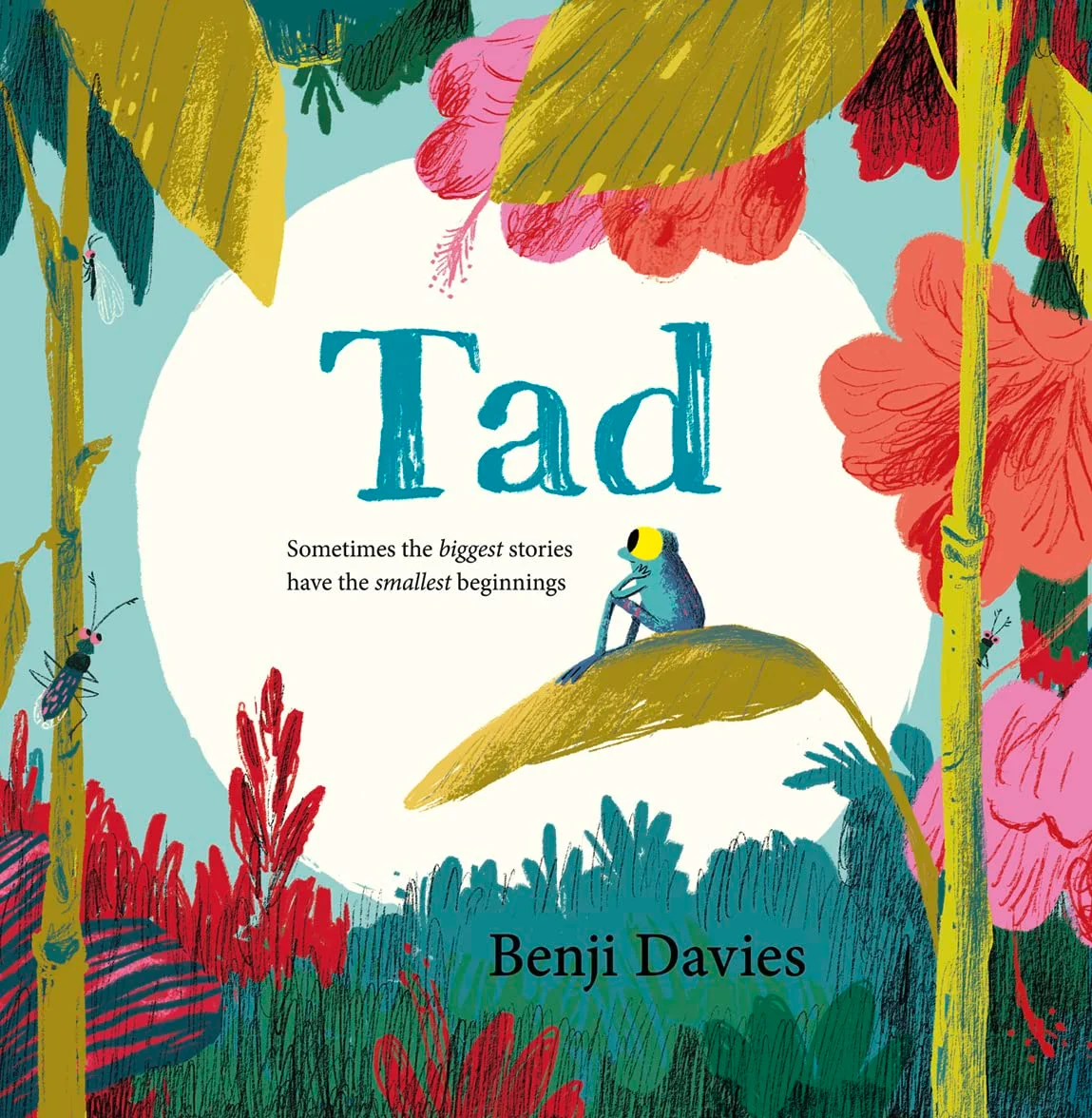
Tad
Affiliate links — buy through these retailers and we earn a small commission, at no extra cost to you.
Tad is the smallest tadpole in the pond. She has to grow up quickly, because the pond is full of things that eat small tadpoles. A gripping, funny, genuinely educational picture book about the frog life cycle that also works as a story about courage and becoming yourself.
- Best for3–6
- FormatPicture
- Length40 pp
- Read aloud~8 min
Affiliate links — buy through these retailers and we earn a small commission, at no extra cost to you.
The vibe
What it’s like.
Style
- Lyrical
- Conversational
- Repetitive
- Comedic
Tone
- Warm
- Gentle
- Exciting
- Suspenseful
- Heartwarming
- Inspirational
Themes
Experience meters
What’s it about?
The story.
There are lots of tadpoles in the pond, and Tad is the smallest. While her siblings grow legs and swim confidently, Tad is slower, and the pond has plenty of hungry things that prefer their tadpoles on the small side. Davies uses the frog life cycle as both the literal subject and the emotional structure: the stages of development mirror Tad's growing confidence, and the predators she faces (rendered in Davies' characteristically gorgeous illustration, beautiful and frightening simultaneously) give the story real stakes. The result is genuinely tense in the way that only the best picture books about nature can be, while the transformative ending is earned and emotionally satisfying. The repetitive structure of the text makes it a natural read-aloud, with a call-and-response rhythm that children pick up quickly. Educational in the truest sense, not because it teaches facts, but because it makes the reader care about a tadpole's life cycle enough to want to understand it.
Fit check
Right for your child?
Where it lands by age
- 1
- 3
- 5
- 7
- 9
- 11
- 13
- Best fit · 3–6
- Read aloud · 3–7
- Independent · 6–7
Prose load
Light
Visual support
Very high
Reluctant-reader friendly
Workable
Read-aloud quality
Excellent
Works well for
- Reading aloud
- Reading together
- Gift-buying
Preview before sharing if a child is sensitive to: scary imagery, animal harm.
Bedtime suitability
3 / 5 · Workable
Sensitive-child
3 / 5 · Mostly fine
Graphic intensity
1 / 5 · None
Best for
- Stunning illustrations
- Educational value
- Emotional depth
- Gift book
- Award winner
Avoid if
No common reasons to avoid this one — a rare clean sweep on the sensitivity flags.
Particularly good for children who are…
- Interested in science
- Anxiety and worry
- Low self esteem
In the classroom
How it works in school.
A warm, suspenseful read-aloud about the littlest tadpole growing up — lovely for talk about courage and a gentle companion for the frog life cycle.
A book children love that happens to support school — never a stand-in for the texts a class is taught with. Reviewed for the classroom · June 2026.
Why it lands
Why they love it.
Why kids love it
The specific tension is being the small one — Tad the smallest tadpole, the pond full of things that eat small tadpoles, her siblings growing legs faster than her. The Davies that turns the frog life cycle into a properly tense survival story for under-fives.
- Surviving danger
- Being special or chosen
- Adventure and freedom
- Making a difference
Why parents love it
The Benji Davies that does nature documentary as picture book — frog life cycle as both subject and structure, beautifully and frighteningly illustrated. Genuinely educational in the truest sense: a child cares about a tadpole's life because of the story.
- Beautiful illustrations
- Conversation starter
- Bedtime appropriate
- Educational for adult too
About the author & illustrator
Benji Davies.
If you liked this
Three ways out of this book.
If you liked this, try…
Lateral matches. Same shelf, different texture.
Come into this from…
Easier or preparing reads — perfect lead-ins.
Where to go next…
Escalation reads — a step up in scale, silliness, or stakes.
More like this…
Books that share themes and topics with this one.
Where you’ll find it