- Picture Books
- Ages 3–6
- Comedy
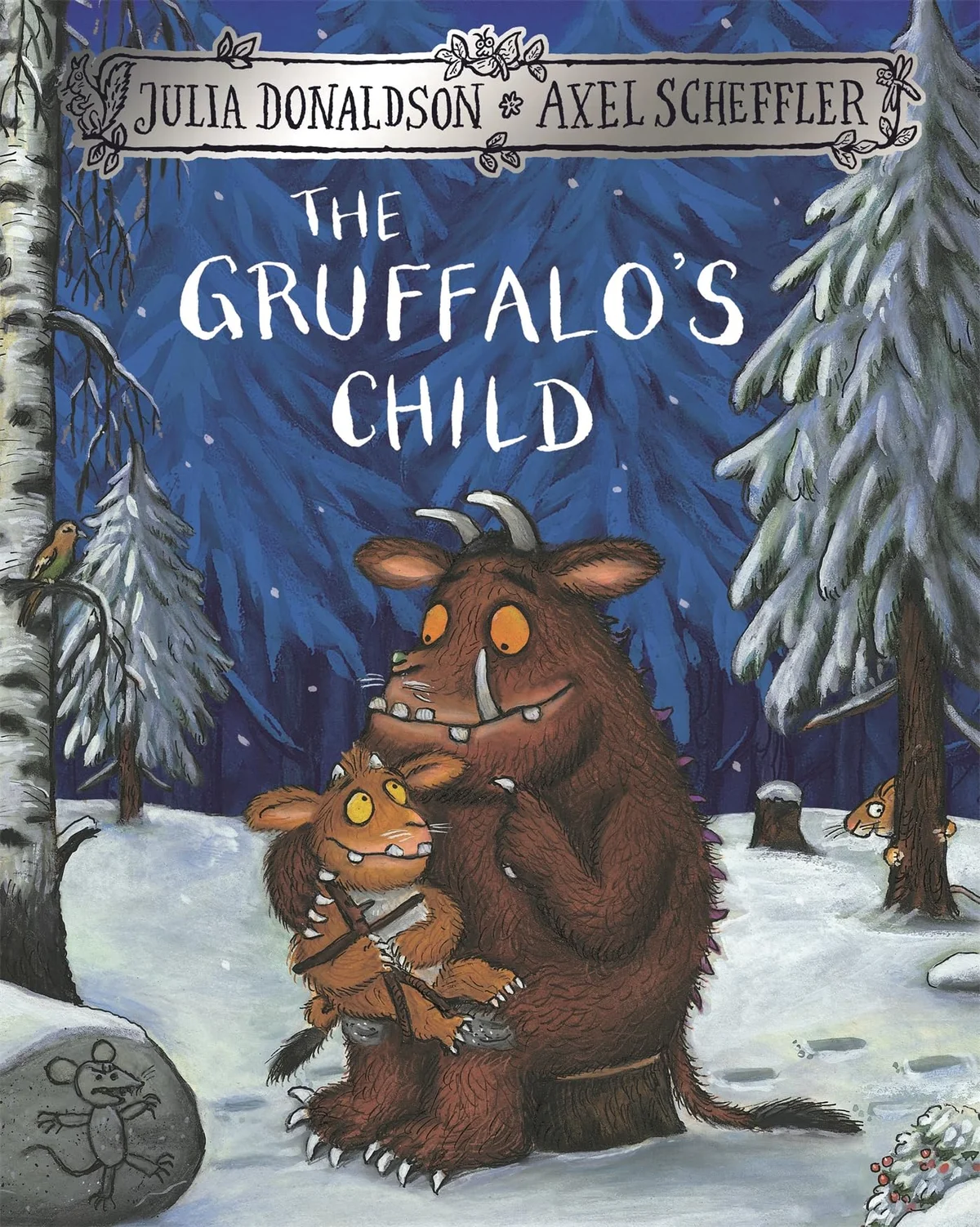
The Gruffalo's Child
Affiliate links — buy through these retailers and we earn a small commission, at no extra cost to you.
Book 2 in The GruffaloView the full series
Part of the Julia Donaldson universeOpen the collection
A snowy, atmospheric sequel that cleverly reverses the original story's power dynamic. It is ideal for children who already love The Gruffalo and want a slightly spookier, wintry return to the deep dark wood.
- Best for3–6
- FormatPicture
- Length32 pp
- Read aloud~6 min
Affiliate links — buy through these retailers and we earn a small commission, at no extra cost to you.
The vibe
What it’s like.
Style
- Rhyming
- Repetitive
- Conversational
- Comedic
Tone
- Funny
- Suspenseful
- Warm
- Cosy
- Whimsical
Themes
Experience meters
What’s it about?
The story.
The Gruffalo has warned his child never to go into the deep dark wood, because somewhere out there lives the Big Bad Mouse. But one wild and windy night, the Gruffalo's Child sneaks out into the snow to see whether the terrifying mouse really exists. The sequel works because it does not simply repeat the first book: it retells the forest encounter from the monster family's side, letting the smallest character once again become the cleverest. The snowy setting gives the story a colder, more suspenseful atmosphere, while Axel Scheffler's illustrations keep it safe and inviting for young readers. Julia Donaldson's rhyme is as polished as ever, and the repeated question of whether the Big Bad Mouse is real gives children a satisfying sense of anticipation. Best read after The Gruffalo, but strong enough to stand alone.
Fit check
Right for your child?
Where it lands by age
- 1
- 3
- 5
- 7
- 9
- 11
- 13
- Best fit · 3–6
- Read aloud · 2–7
- Independent · 5–7
Prose load
Light
Visual support
Very high
Reluctant-reader friendly
Very
Read-aloud quality
Excellent
Works well for
- Reading aloud
- Bedtime
- Reading together
- Reluctant readers
Nothing in the book is likely to concern most parents. Safe to recommend without preview.
Bedtime suitability
5 / 5 · Bedtime-friendly
Sensitive-child
3 / 5 · Mostly fine
Graphic intensity
1 / 5 · None
Best for
- Classic read aloud
- Winter
- Monsters
- Rhyming
- Bedtime
Avoid if
- Very sensitive to night fears
- Has not read the gruffalo
Particularly good for children who are…
- Reluctant reader
- Nightmares or fears
In the classroom
How it works in school.
A rhyming read-aloud classic children join in with — ideal for prediction, sequencing and performing aloud.
A book children love that happens to support school — never a stand-in for the texts a class is taught with. Reviewed for the classroom · June 2026.
Why it lands
Why they love it.
Why kids love it
The specific thrill is the reversal — this time it's the small Gruffalo looking for the Big Bad Mouse, and the mouse using the same shadow-on-the-snow trick from the original to make himself look enormous. A three-year-old who knows the first book gets the satisfaction of being in on the joke.
- Surviving danger
- Adventure and freedom
- Trickery and cleverness
Why parents love it
The sequel that inverts the original — child looking for danger rather than mouse fleeing it — and somehow stays just as strong. The snowy-woods illustrations are some of Scheffler's best. Best read after the first Gruffalo, when a child already knows the trick and gets the pleasure of seeing it reused.
- Nostalgia
- Shared humour
- Bedtime appropriate
- Beloved classic
In the series
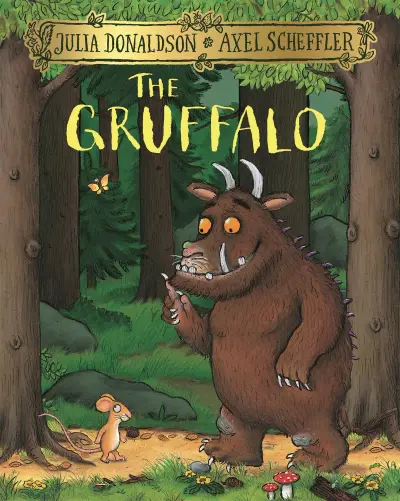
The Gruffalo.
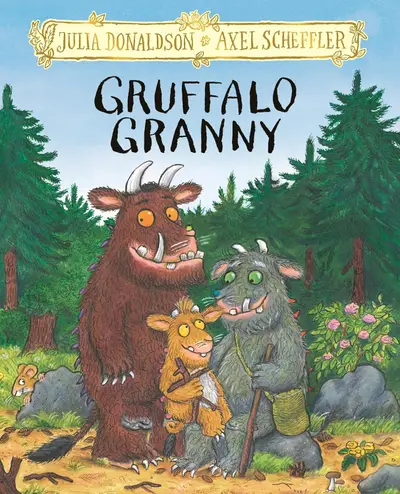
3 books · open the series →
About the creators
About the creators.
If you liked this
Three ways out of this book.
If you liked this, try…
Lateral matches. Same shelf, different texture.
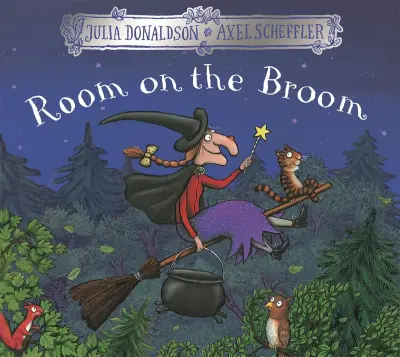
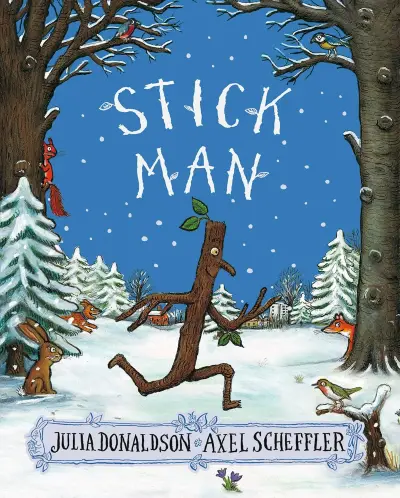
Come into this from…
Easier or preparing reads — perfect lead-ins.
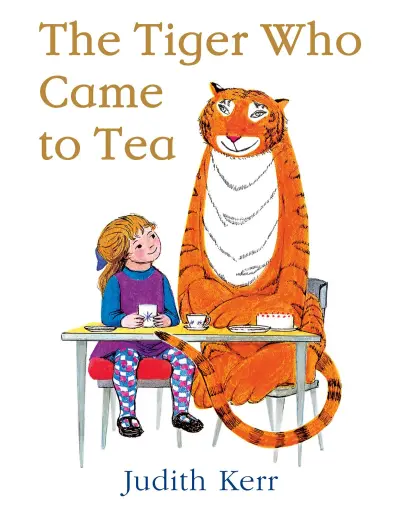
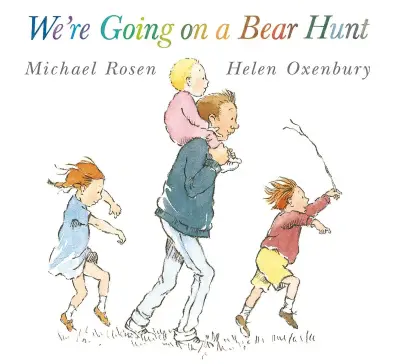
Where to go next…
Escalation reads — a step up in scale, silliness, or stakes.
Where you’ll find it