- Illustrated Chapter Books
- Ages 7–10
- Adventure
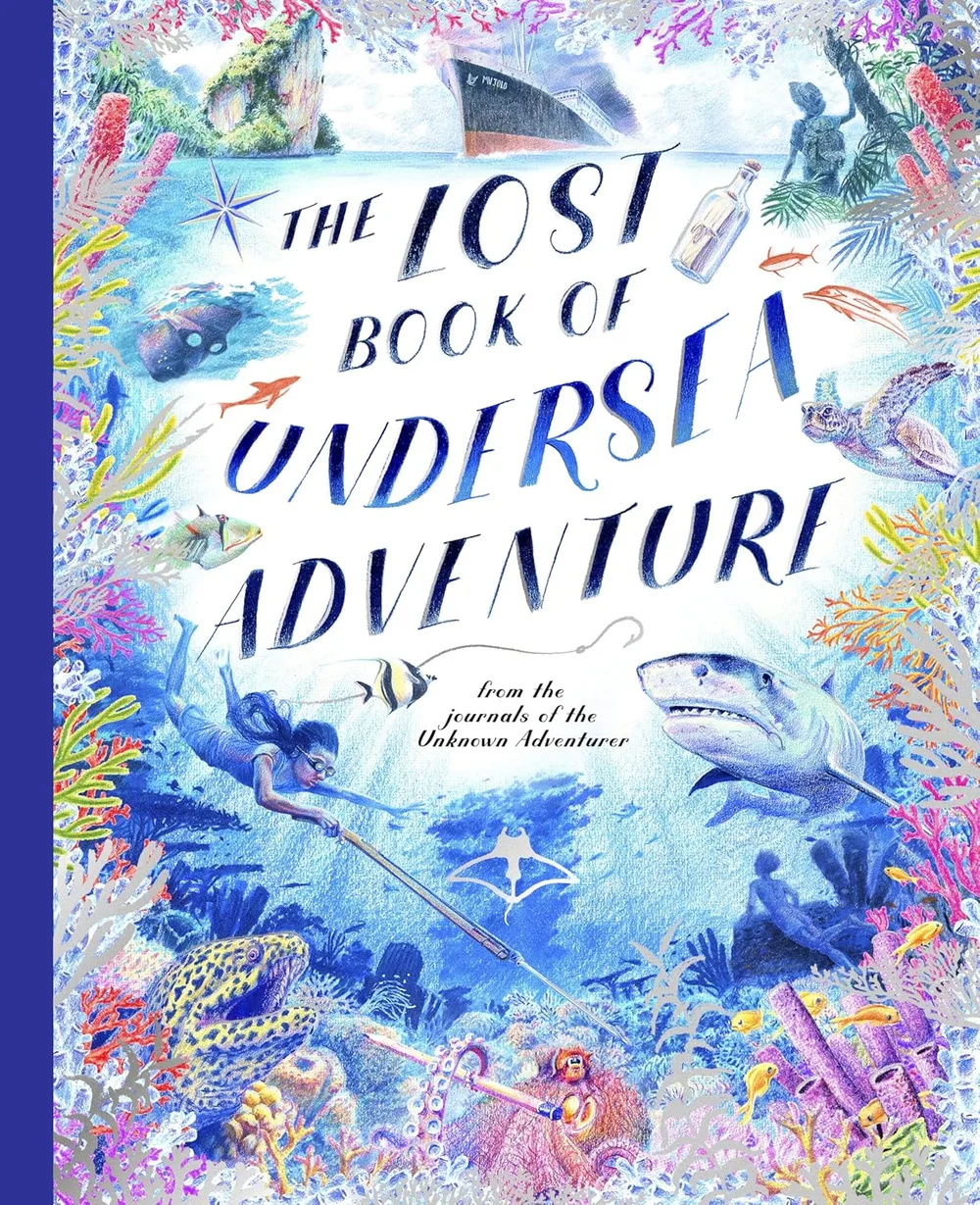
The Lost Book of Undersea Adventure
Affiliate links — buy through these retailers and we earn a small commission, at no extra cost to you.
Book 3 in The Unknown AdventurerView the full series
A lavish faux-journal adventure that mixes castaway survival, underwater mystery and practical explorer detail. Strong for children who like maps, field notes, danger, marine life and books that look like discovered artefacts.
- Best for7–10
- FormatIllustrated
- Length96 pp
- Read aloud~1 hr20 min
Affiliate links — buy through these retailers and we earn a small commission, at no extra cost to you.
The vibe
What it’s like.
Style
- Epistolary
- Conversational
- Second person
Tone
- Adventurous
- Exciting
- Suspenseful
- Thought provoking
Themes
Experience meters
What’s it about?
The story.
The Lost Book of Undersea Adventure is presented as the Unknown Adventurer's own journal, begun after he is flung from a ferry and washed up on a deserted island. Alone, he uses survival skills to find food, make shelter and keep a promise to write for his younger siblings, but the island soon proves stranger than it first appears. Across the lagoon lies a mystery that pulls the story beneath the waves, into marine life, legends, environmental danger and discovery. The appeal is the format as much as the plot: handwritten notes, maps, sketches, stuck-in pages and detailed illustrations make the book feel like a real field journal. It should work well for reluctant readers who like visual texture, practical facts and high-stakes adventure without committing to dense prose.
Fit check
Right for your child?
Where it lands by age
Best for confident visual readers from about 7 or 8, especially those who like journals, maps and survival facts. The peril makes it less bedtime-cosy, but the visual format keeps the reading accessible.
- 1
- 3
- 5
- 7
- 9
- 11
- 13
- Best fit · 7–10
- Read aloud · 7–10
- Independent · 8–11
Prose load
Moderate
Visual support
High
Reluctant-reader friendly
Very
Read-aloud quality
Workable
Works well for
- Reading together
- Gift-buying
- Reluctant readers
Nothing in the book is likely to concern most parents. Safe to recommend without preview.
Bedtime suitability
2 / 5 · Better outside bedtime
Sensitive-child
3 / 5 · Mostly fine
Graphic intensity
1 / 5 · None
Best for
- Survival adventure
- Field journal
- Marine life
- Maps
- Visual nonfiction fans
Avoid if
- Needs gentle bedtime
- Prefers realistic school stories
- Dislikes peril
Particularly good for children who are…
- Reluctant reader
- Interested in science
- Interested in art and creativity
In the classroom
How it works in school.
The journal format is a strong model for expedition writing, map work, survival research and marine-life topic links.
A book children love that happens to support school — never a stand-in for the texts a class is taught with.
Why it lands
Why they love it.
Why kids love it
It looks like something discovered in a waterproof bag: maps, notes, sketches, survival problems and secrets beneath the lagoon. Children can read for story or pore over the artefact-like pages.
- Surviving danger
- Adventure and freedom
- Being a detective
- Secret world
- Making a difference
Why parents love it
The format gives visual readers plenty to hold onto, while the survival and marine-life details open natural conversations about exploration, ecosystems and environmental responsibility.
- Beautiful illustrations
- Educational for adult too
- Conversation starter
- Indie gem discovery
About the creators
About the creators.
If you liked this
Three ways out of this book.
If you liked this, try…
Lateral matches. Same shelf, different texture.
Come into this from…
Easier or preparing reads — perfect lead-ins.
Where to go next…
Escalation reads — a step up in scale, silliness, or stakes.
More like this…
Books that share themes and topics with this one.