- Graphic Novels
- Ages 10–14
- Biography
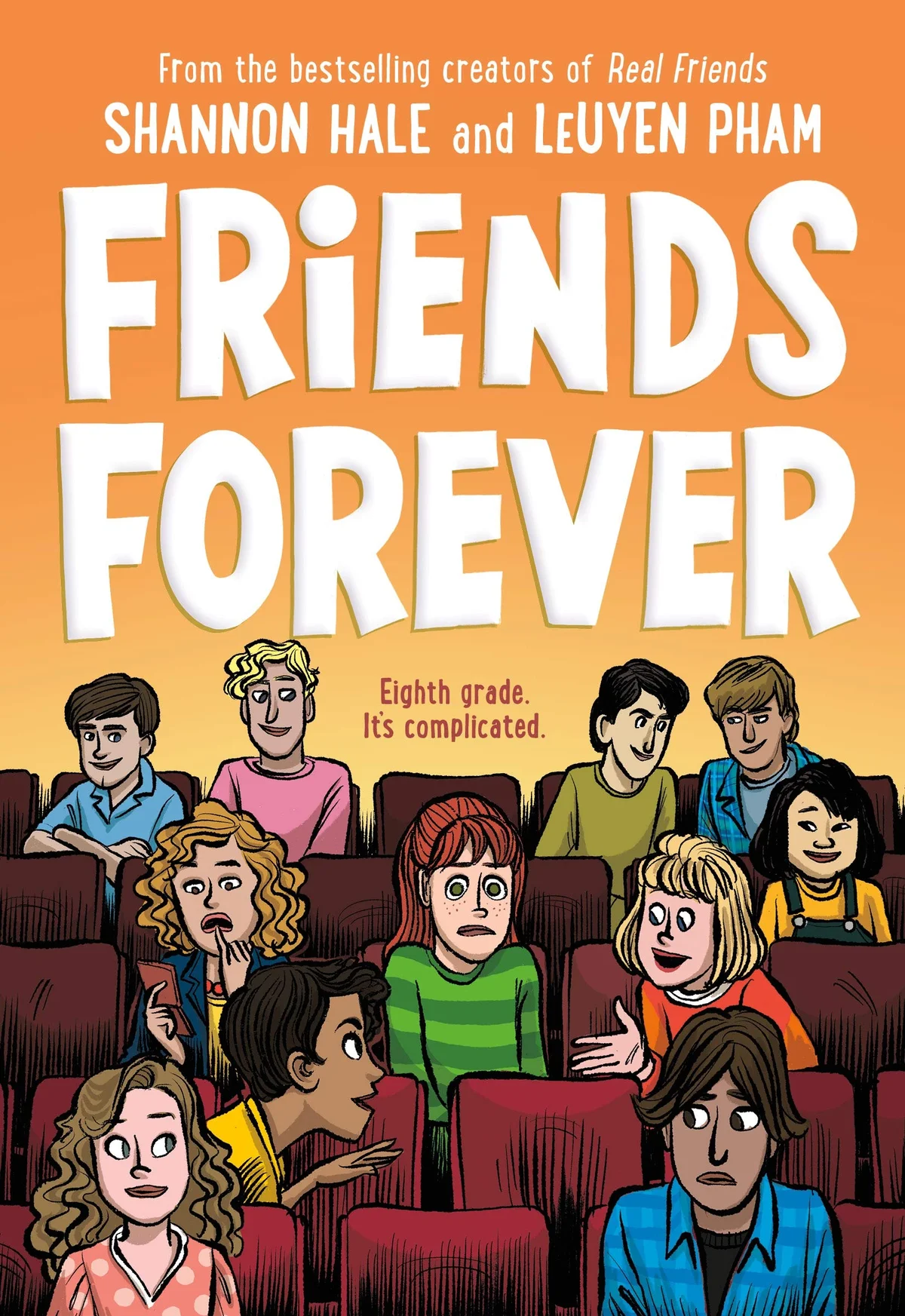
Friends Forever
Affiliate links — buy through these retailers and we earn a small commission, at no extra cost to you.
Book 3 in FriendsView the full series
The most emotionally mature Real Friends book, following Shannon into eighth grade as friendship pressure becomes tangled with self-worth, dating and anxiety. It is honest, compassionate and best for slightly older tween readers.
- Best for10–14
- FormatGraphic
- Length304 pp
- Read aloud~2 hr25 min
Affiliate links — buy through these retailers and we earn a small commission, at no extra cost to you.
The vibe
What it’s like.
Style
- Conversational
- Literary
Tone
- Bittersweet
- Thought provoking
- Heartwarming
- Warm
Themes
Experience meters
What’s it about?
The story.
Shannon is in eighth grade, and life feels more complicated than ever. Classmates are starting to date, social expectations keep shifting, and Shannon cannot understand why happiness feels so hard to hold onto. She wants friends, love, confidence and a clear path, but instead she often feels worried, lonely and wrong. Friends Forever brings the Real Friends graphic memoir trilogy to its most introspective point. Shannon Hale writes directly about anxiety, self-worth and the pressure to become the version of yourself other people seem to expect, while LeUyen Pham's artwork keeps the emotional landscape readable and humane. This is still accessible middle-grade graphic memoir, but its themes are older and deeper than the first book. It is a particularly useful recommendation for readers dealing with friendship fatigue, early teen social comparison or anxious self-questioning.
Fit check
Right for your child?
Where it lands by age
- 1
- 3
- 5
- 7
- 9
- 11
- 13
- Best fit · 10–14
- Read aloud · 9–14
- Independent · 10–14
Prose load
Light
Visual support
Very high
Reluctant-reader friendly
Very
Read-aloud quality
Workable
Works well for
- Gift-buying
- Reluctant readers
Preview before sharing if a child is sensitive to: mental health, body image, bullying.
Bedtime suitability
2 / 5 · Better outside bedtime
Sensitive-child
3 / 5 · Mostly fine
Graphic intensity
1 / 5 · None
Best for
- Older tween friendship
- Anxiety story
- Self acceptance
- Graphic memoir
- Middle school emotions
Avoid if
- Sensitive to mental health themes
- Wants light friendship comedy
- Wants escapist fantasy
- Prefers action plot
Particularly good for children who are…
- Low self esteem
- Anxiety and worry
- Making friends
- Moving to secondary school
- Reluctant reader
- Being bullied
In the classroom
How it works in school.
A candid graphic memoir about anxiety and growing up — a strong discussion read for older readers and a reluctant-reader favourite.
A book children love that happens to support school — never a stand-in for the texts a class is taught with. Reviewed for the classroom · June 2026.
Why it lands
Why they love it.
Why kids love it
The specific recognition is the eighth-grade weight — friendship pressure tangled up with self-worth, first crushes, anxiety, the sense that being yourself has somehow stopped being enough. The graphic memoir for an older tween reader who's begun to wonder whether everyone else has the social rulebook.
- Being understood finally
- Friendship and belonging
- Proving yourself
- Making a difference
Why parents love it
The closing book of the Real Friends trilogy — eighth grade, anxiety, body image, dating pressure, the work of separating who you are from what other people expect. More mature than the earlier two; the right next-step for an older reader who grew up with the series.
- Conversation starter
- Great writing
- Cultural representation
- Beautiful illustrations
In the series
Friends.
3 books · open the series →
About the creators
About the creators.
If you liked this
Three ways out of this book.
If you liked this, try…
Lateral matches. Same shelf, different texture.
Come into this from…
Easier or preparing reads — perfect lead-ins.
Where to go next…
Escalation reads — a step up in scale, silliness, or stakes.
More like this…
Books that share themes and topics with this one.
Where you’ll find it