- Graphic Novels
- Ages 8–12
- Fantasy
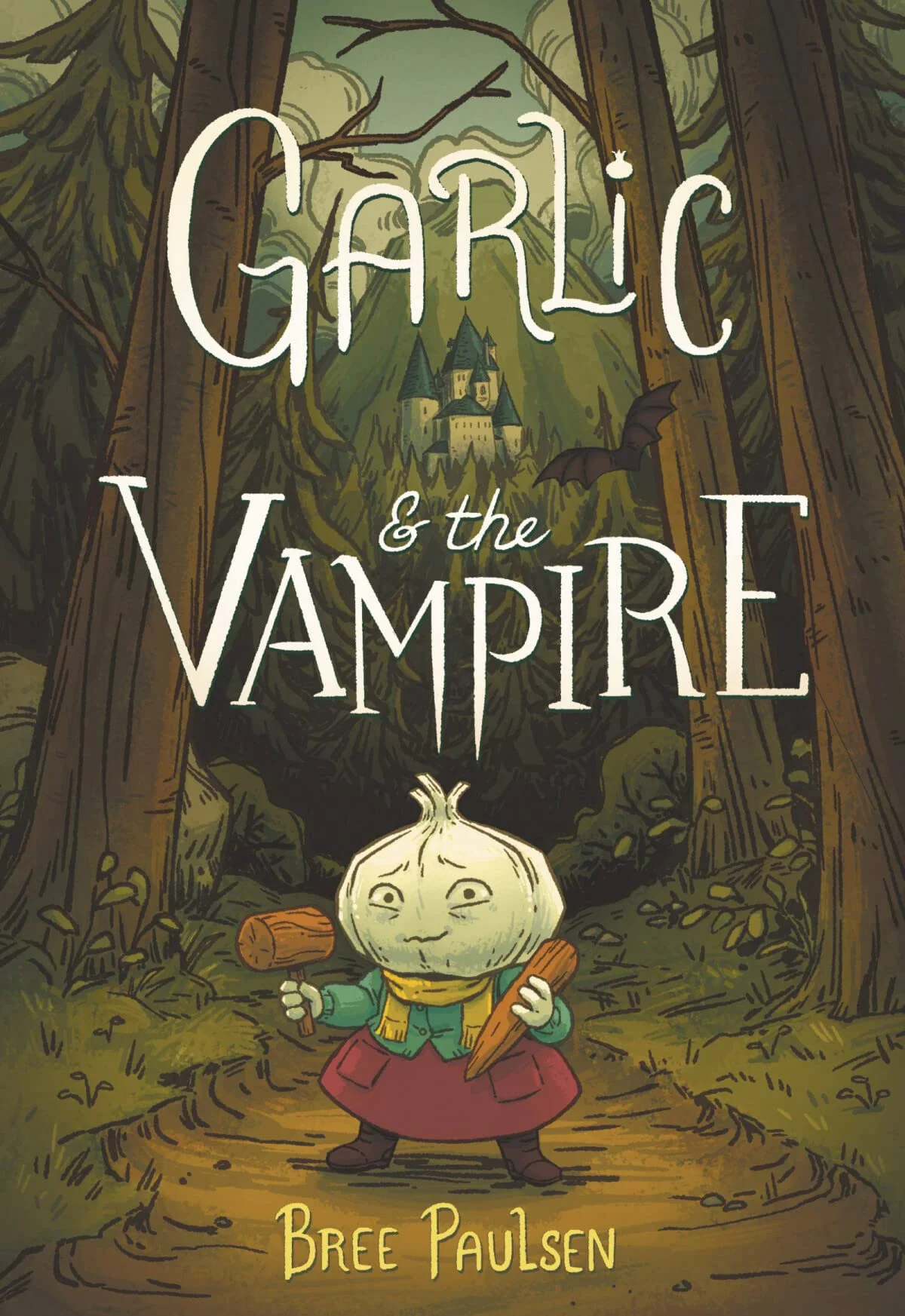
Garlic and the Vampire: A Graphic Novel
Affiliate links — buy through these retailers and we earn a small commission, at no extra cost to you.
Book 1 in GarlicView the full series
A cosy, tender graphic novel about a nervous little vegetable finding courage in the face of a supposedly terrifying vampire. It is gentle, funny and unusually good for anxious readers who like magical stories with emotional reassurance.
- Best for8–12
- FormatGraphic
- Length160 pp
- Read aloud~1 hr15 min
Affiliate links — buy through these retailers and we earn a small commission, at no extra cost to you.
The vibe
What it’s like.
Style
- Conversational
- Comedic
Tone
- Warm
- Funny
- Gentle
- Heartwarming
- Whimsical
Themes
Experience meters
What’s it about?
The story.
Garlic is one of Witch Agnes's vegetable helpers, and she is happiest when life is quiet, safe and predictable. She tends the garden with her friend Carrot, worries about getting things wrong, and assumes she is probably not brave enough for anything dramatic. But when the village discovers that a vampire has moved into the nearby castle, everyone decides Garlic is the obvious person to confront him. After all, garlic is meant to frighten vampires. Reluctantly, Garlic sets off, terrified that she will fail. What she finds is not quite what anyone expected. Bree Paulsen's debut graphic novel is a soft, funny and beautifully illustrated story about anxiety, courage and not judging others by scary stories. Its autumnal palette, vegetable folk and gentle humour make it feel like comfort reading with just enough adventure to keep pages turning.
Fit check
Right for your child?
Where it lands by age
- 1
- 3
- 5
- 7
- 9
- 11
- 13
- Best fit · 8–12
- Read aloud · 7–11
- Independent · 8–12
Prose load
Light
Visual support
Very high
Reluctant-reader friendly
Very
Read-aloud quality
Workable
Works well for
- Bedtime
- Gift-buying
- Reluctant readers
Nothing in the book is likely to concern most parents. Safe to recommend without preview.
Bedtime suitability
4 / 5 · Bedtime-friendly
Sensitive-child
3 / 5 · Mostly fine
Graphic intensity
1 / 5 · None
Best for
- Cosy graphic novel
- Anxious readers
- Gentle fantasy
- Autumnal reading
- Misunderstood monsters
Avoid if
- Wants fast action
- Dislikes vampires
- Prefers realistic stories
Particularly good for children who are…
- Anxiety and worry
- Reluctant reader
- Low self esteem
- Nightmares or fears
In the classroom
How it works in school.
A cosy, charming graphic-novel series about an anxious garlic bulb finding courage — a gentle reluctant-reader pick that opens talk about worry and confidence.
A book children love that happens to support school — never a stand-in for the texts a class is taught with. Reviewed for the classroom · June 2026.
Why it lands
Why they love it.
Why kids love it
The specific charm is anxious Garlic — a small living vegetable terrified of being sent to confront a vampire because, well, she's garlic and that's what garlic does. The graphic novel where the vampire isn't the problem and the heroine's own self-doubt is. Cosy and quietly brave.
- Making a difference
- Friendship and belonging
- Surviving danger
- Secret world
Why parents love it
The cosy-graphic-novel for an anxious child — small vegetable heroine, reluctant heroism, a vampire who turns out to be friendlier than legends suggest. Bree Paulsen's autumnal palette and gentle humour make it comfort reading with just enough adventure. Reliable gift for the nervous reader.
- Beautiful illustrations
- Bedtime appropriate
- Conversation starter
- Quick to read
In the series
Garlic.
2 books · open the series →
About the author & illustrator
Bree Paulsen.
If you liked this
Three ways out of this book.
If you liked this, try…
Lateral matches. Same shelf, different texture.
Come into this from…
Easier or preparing reads — perfect lead-ins.
Where to go next…
Escalation reads — a step up in scale, silliness, or stakes.
More like this…
Books that share themes and topics with this one.
Where you’ll find it