- Picture Books
- Ages 3–7
- Everyday Life
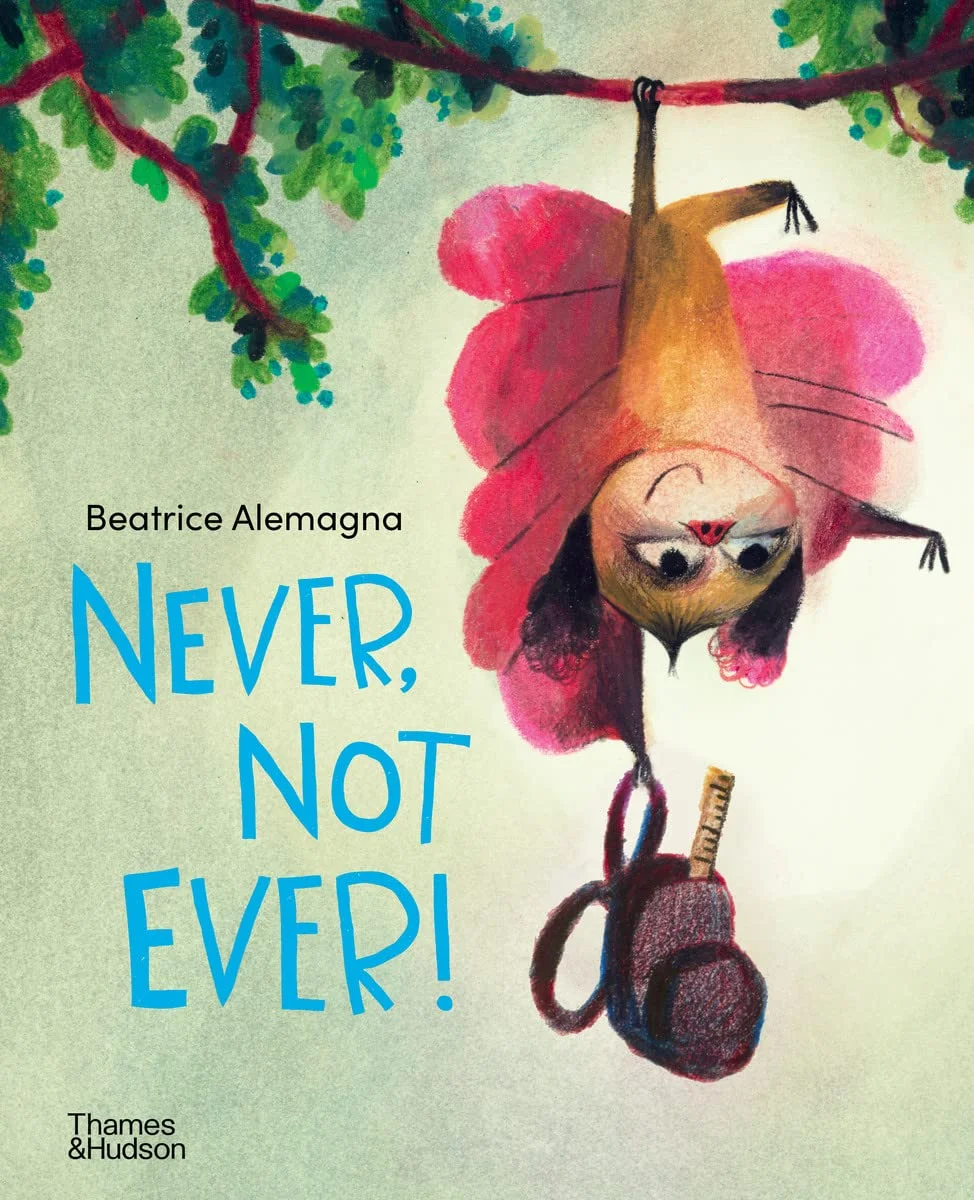
Never, Not Ever!
Affiliate links — buy through these retailers and we earn a small commission, at no extra cost to you.
Book 1 in PascalineView the full series
Part of the Beatrice Alemagna universeOpen the collection
A funny, highly child-facing Pascaline story about refusing to go to school. It is one of Alemagna's most practical recommendations for nursery, reception or school-start anxiety.
- Best for3–7
- FormatPicture
- Length48 pp
- Read aloud~10 min
Affiliate links — buy through these retailers and we earn a small commission, at no extra cost to you.
The vibe
What it’s like.
Style
- Repetitive
- Conversational
- Comedic
Tone
- Funny
- Silly
- Warm
- Heartwarming
- Cosy
Themes
Experience meters
What’s it about?
The story.
Pascaline is a little bat with very strong feelings. Her parents say it is time to go to school, but Pascaline has made up her mind: never, not ever. She shouts so loudly that something extraordinary happens, and her parents shrink down small enough to fit under her wing. At first, taking them to school with her seems like a perfect solution. But school is full of noise, activities, lunch, lessons and other children, and having tiny parents with her all day is not quite as helpful as Pascaline expected. Never, Not Ever! is a funny, warm and very usable picture book about separation, school refusal and discovering that independence can feel better than fear predicted. Beatrice Alemagna's expressive bat characters make the emotional drama playful rather than heavy, and the repeated title phrase is ideal for read-aloud performance.
Fit check
Right for your child?
Where it lands by age
- 1
- 3
- 5
- 7
- 9
- 11
- 13
- Best fit · 3–7
- Read aloud · 2–7
- Independent · 5–7
Prose load
Light
Visual support
Very high
Reluctant-reader friendly
Very
Read-aloud quality
Excellent
Works well for
- Reading aloud
- Bedtime
- Reading together
- Gift-buying
- Reluctant readers
Nothing in the book is likely to concern most parents. Safe to recommend without preview.
Bedtime suitability
5 / 5 · Bedtime-friendly
Sensitive-child
5 / 5 · Good fit
Graphic intensity
1 / 5 · None
Best for
- Starting school
- School refusal
- Funny picture book
- Separation anxiety
- Pascaline entry
Avoid if
- Wants realistic human school story
- Prefers rhyming books
- Dislikes shouty characters
Particularly good for children who are…
- Starting school
- Starting nursery or preschool
- Separation anxiety
- Anxiety and worry
- Making friends
In the classroom
How it works in school.
A warm, beautifully illustrated picture-book series about growing up and being brave — a lovely read-aloud that opens talk about feelings.
A book children love that happens to support school — never a stand-in for the texts a class is taught with. Reviewed for the classroom · June 2026.
Why it lands
Why they love it.
Why kids love it
The specific delight is the tiny parents — Pascaline refusing to go to school in the loudest possible terms, her parents shrinking small enough to fit under her wing, the perfect solution turning out to be less helpful than she expected. The Alemagna Pascaline opener for the small child currently digging in.
- Transformation
- Family belonging
- Friendship and belonging
- Being special or chosen
Why parents love it
The Beatrice Alemagna Pascaline opener — separation-anxiety and school-refusal handled with brushy expressive bat-family drama, repeated title phrase ideal for performance. One of her most practical school-start picks.
- Shared humour
- Conversation starter
- Bedtime appropriate
- Beautiful illustrations
In the series
Pascaline.
2 books · open the series →
About the author & illustrator
Beatrice Alemagna.
If you liked this
Three ways out of this book.
If you liked this, try…
Lateral matches. Same shelf, different texture.
Come into this from…
Easier or preparing reads — perfect lead-ins.
Where to go next…
Escalation reads — a step up in scale, silliness, or stakes.
More like this…
Books that share themes and topics with this one.
Where you’ll find it