- Reference
- Ages 8–12
- Social History
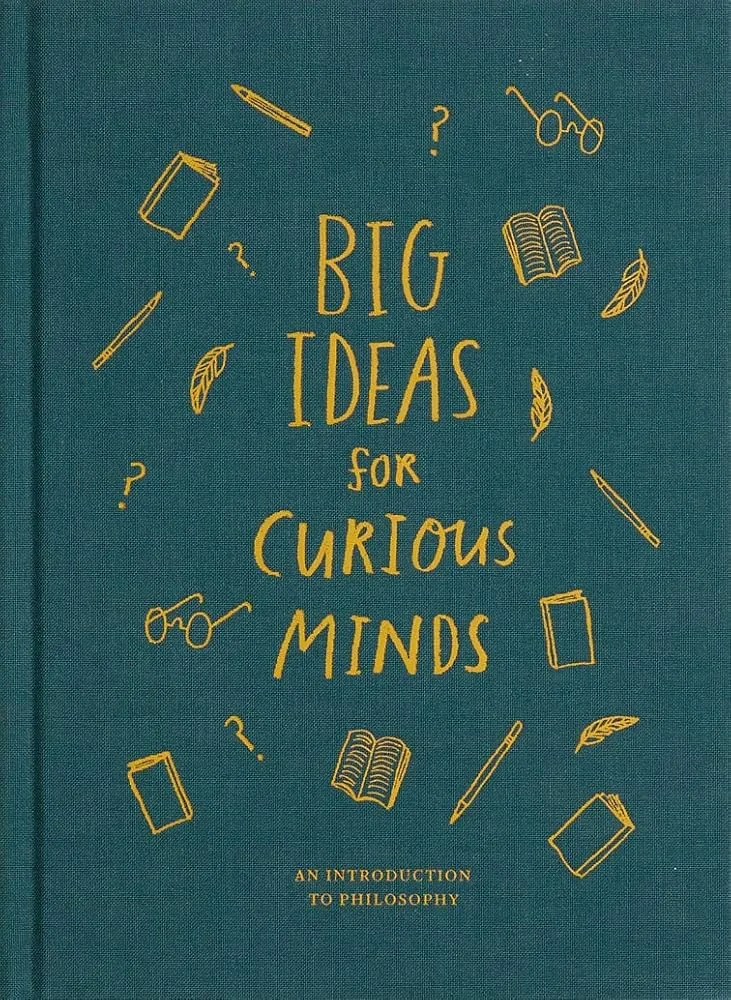
Big Ideas for Curious Minds
Affiliate links — buy through these retailers and we earn a small commission, at no extra cost to you.
A child-friendly introduction to philosophy and big human questions. Best for curious older primary readers, family discussion, thoughtful bedtime conversations and children who like ideas more than plot.
- Best for8–12
- FormatReference
- Length160 pp
- Read aloud~4 hr50 min
Affiliate links — buy through these retailers and we earn a small commission, at no extra cost to you.
The vibe
What it’s like.
Style
- Conversational
- Literary
Tone
- Thought provoking
- Inspirational
- Warm
- Gentle
Themes
Experience meters
What’s it about?
The story.
Big Ideas for Curious Minds introduces children to philosophy through clear explanations of major thinkers and the questions their ideas can help us explore. Rather than presenting philosophy as something dry or academic, it connects ideas to everyday childhood concerns: friendship, worry, kindness, fairness, anger, confidence, sadness and how to live well. The book is not a narrative picture book, so it should be recommended differently from story-led titles. It works best as a browsable, shared discussion book for older primary children and adults, especially families who enjoy talking about why people behave as they do and how we can understand ourselves better. It is valuable as a parent-approved, curiosity-led reference book that can sit alongside more literary picture books and graphic novels as a deeper thinking tool.
Fit check
Right for your child?
Where it lands by age
- 1
- 3
- 5
- 7
- 9
- 11
- 13
- Best fit · 8–12
- Read aloud · 8–12
- Independent · 9–13
Prose load
Heavy
Visual support
Moderate
Reluctant-reader friendly
Workable
Read-aloud quality
Strong
Works well for
- Reading aloud
- Bedtime
- Gift-buying
Nothing in the book is likely to concern most parents. Safe to recommend without preview.
Bedtime suitability
4 / 5 · Bedtime-friendly
Sensitive-child
4 / 5 · Good fit
Graphic intensity
1 / 5 · None
Best for
- Philosophy for children
- Big questions
- Family discussion
- Curious readers
- Thoughtful gift
Avoid if
- Wants story plot
- Under 8
- Prefers light funny books
- Needs low text load
Particularly good for children who are…
- Interested in science
- Low self esteem
- Interested in art and creativity
- Anxiety and worry
In the classroom
How it works in school.
An illustrated introduction to big philosophical ideas — a rich springboard for class discussion and thinking about life, feelings and fairness.
A book children love that happens to support school — never a stand-in for the texts a class is taught with. Reviewed for the classroom · June 2026.
Why it lands
Why they love it.
Why kids love it
The specific delight is the questions — twenty-five big ideas from kindness to wonder, philosophy attached to friendship and worry and fairness rather than to dead men in togas. The School of Life book for a curious older-primary kid who wants to think about how to live.
- Making a difference
- Being special or chosen
Why parents love it
The School of Life flagship children's book — philosophy presented through everyday childhood concerns rather than academic history. Best used as a browsable shared-discussion book for families who like talking about why people behave as they do. Not a story; a thinking tool.
- Conversation starter
- Educational for adult too
- Great writing
- Bedtime appropriate
About the author
The School of Life.
If you liked this
Three ways out of this book.
If you liked this, try…
Lateral matches. Same shelf, different texture.
Where to go next…
Escalation reads — a step up in scale, silliness, or stakes.
More like this…
Books that share themes and topics with this one.