- Board Books
- Ages 0–3
- Everyday Life
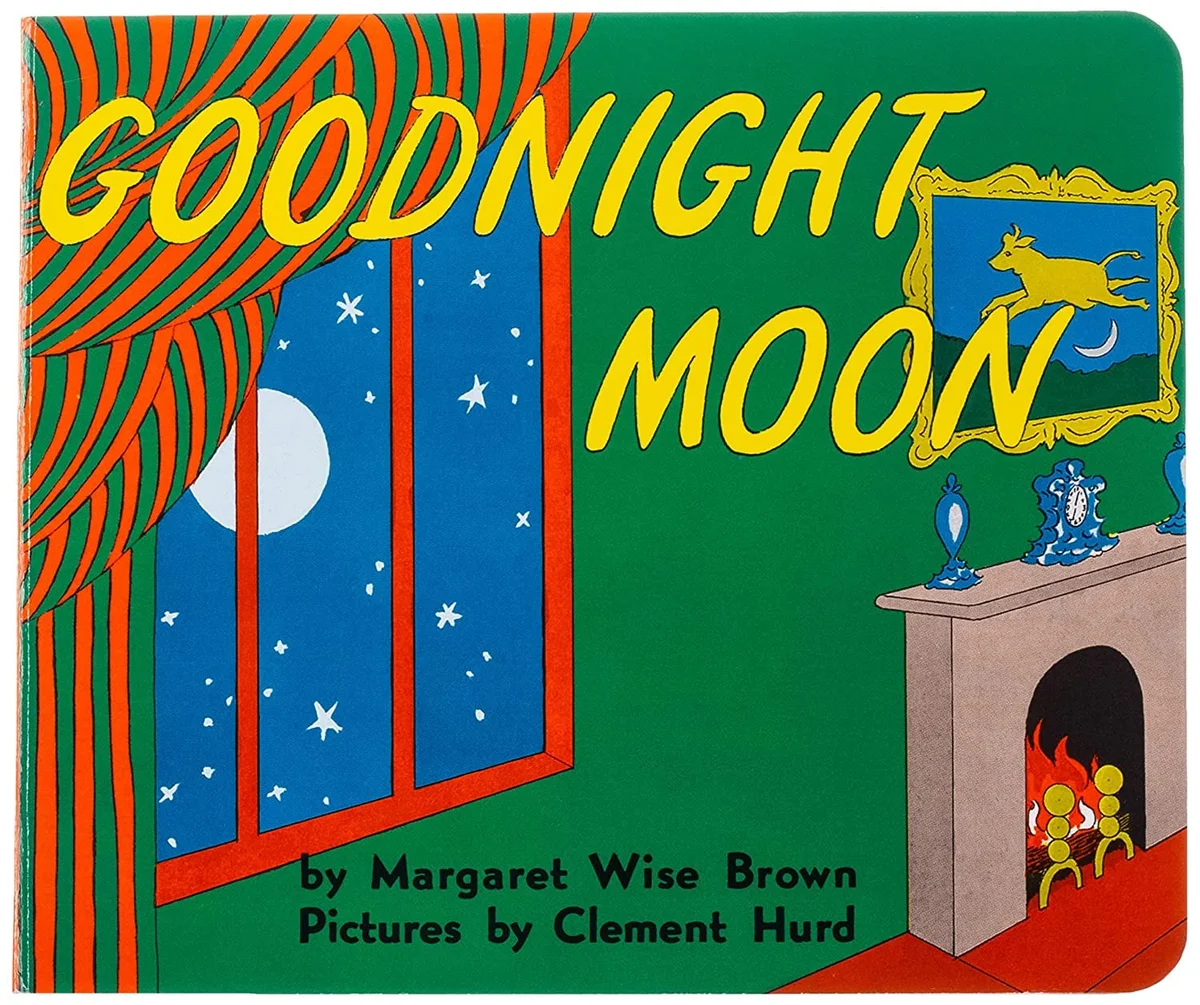
Goodnight Moon
Affiliate links — buy through these retailers and we earn a small commission, at no extra cost to you.
A definitive bedtime board book: rhythmic, hushed, and almost hypnotically good at slowing the room down. Its simplicity is exactly the point, making it one of the safest and strongest first-books for babies and toddlers.
- Best for0–3
- FormatBoard
- Length34 pp
- Read aloud~5 min
Affiliate links — buy through these retailers and we earn a small commission, at no extra cost to you.
The vibe
What it’s like.
Style
- Rhyming
- Repetitive
- Lyrical
Tone
- Gentle
- Cosy
- Warm
- Nostalgic
Themes
Experience meters
What’s it about?
The story.
In the great green room, a little bunny prepares for sleep by saying goodnight to everything familiar: the moon, the stars, the clocks, the socks, the kittens, the mittens, and the quiet old lady whispering hush. Margaret Wise Brown's text has the feel of a bedtime ritual rather than a conventional plot, using repetition, rhyme, and gradually softening images to create a deep sense of safety and calm. Clement Hurd's illustrations move between the bright, strange cosiness of the room and quieter monochrome details, giving very young children plenty to notice on repeated readings. It is a book about settling, naming, noticing, and gently letting go of the day.
“In the great green room there was a telephone and a red balloon and a picture of — the cow jumping over the moon.”
Fit check
Right for your child?
Where it lands by age
- 1
- 3
- 5
- 7
- 9
- 11
- 13
- Best fit · 0–3
- Read aloud · 0–4
- Independent · 4–6
Prose load
Minimal
Visual support
High
Reluctant-reader friendly
Very
Read-aloud quality
Excellent
Works well for
- Reading aloud
- Bedtime
- Gift-buying
- Reluctant readers
Nothing in the book is likely to concern most parents. Safe to recommend without preview.
Bedtime suitability
5 / 5 · Bedtime-friendly
Sensitive-child
5 / 5 · Good fit
Graphic intensity
1 / 5 · None
Best for
- Baby bedtime
- Toddler classic
- Calming read aloud
- First library
- Routine reading
Avoid if
- Needs plot
- Wants modern pacing
Particularly good for children who are…
- Bedtime battles
- Separation anxiety
In the classroom
How it works in school.
The timeless bedtime classic — a soothing, rhythmic read-aloud for the very youngest.
A book children love that happens to support school — never a stand-in for the texts a class is taught with. Reviewed for the classroom · June 2026.
Why it lands
Why they love it.
Why kids love it
Children love the world getting smaller and smaller around them — the sense of every familiar thing in the great green room being safely accounted for before sleep. The rhythm does the work; by the third reading a small child will say goodnight to the mittens and the mouse before the page turns.
- Cosy safety
Why parents love it
The book that physically slows a small child down and dims their wakefulness as you read. Three minutes a night for years, and it still works.
- Beloved classic
- Bedtime appropriate
- Nostalgia
- Quick to read
About the creators
About the creators.
If you liked this
Three ways out of this book.
If you liked this, try…
Lateral matches. Same shelf, different texture.
Come into this from…
Easier or preparing reads — perfect lead-ins.
Where to go next…
Escalation reads — a step up in scale, silliness, or stakes.
More like this…
Books that share themes and topics with this one.

Where you’ll find it