- Picture Books
- Ages 3–7
- Fantasy
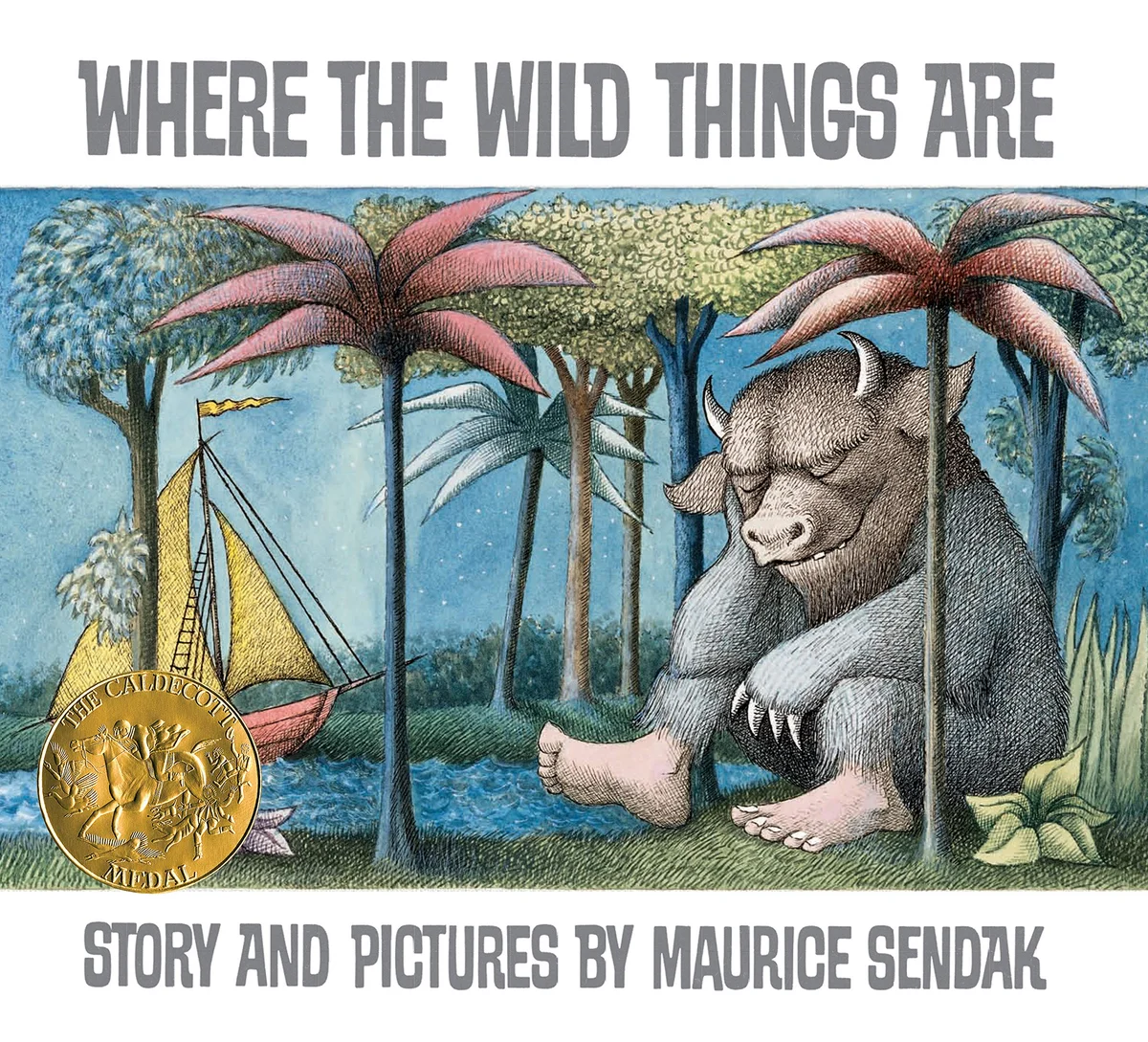
Where the Wild Things Are
Affiliate links — buy through these retailers and we earn a small commission, at no extra cost to you.
A true picture-book classic about anger, fantasy, and returning to love after emotional storminess. It still feels wild, strange, and psychologically sharp rather than merely cosy.
- Best for3–7
- FormatPicture
- Length48 pp
- Read aloud~10 min
Affiliate links — buy through these retailers and we earn a small commission, at no extra cost to you.
The vibe
What it’s like.
Style
- Literary
- Repetitive
Tone
- Dark
- Whimsical
- Heartwarming
- Adventurous
Themes
Experience meters
What’s it about?
The story.
Max is sent to bed without supper after behaving wildly at home. In his room, the walls seem to fall away, a forest grows, and Max sails to the land of the Wild Things: huge, toothy creatures who recognise him as the wildest thing of all. He becomes their king, leads the wild rumpus, and enjoys the fantasy of absolute power and freedom. But after the roaring and dancing, Max begins to feel lonely and wants to be where someone loves him best of all. Maurice Sendak's classic picture book turns childhood anger into a mythic journey, giving children a safe imaginative space for fury, independence, and return. Its monsters may look fierce, but the emotional arc is one of reassurance, home, and being loved even after bad behaviour.
“The night Max wore his wolf suit and made mischief of one kind and another his mother called him "WILD THING!" and Max said "I'LL EAT YOU UP!" so he was sent to bed without eating anything.”
Fit check
Right for your child?
Where it lands by age
- 1
- 3
- 5
- 7
- 9
- 11
- 13
- Best fit · 3–7
- Read aloud · 3–8
- Independent · 6–8
Prose load
Minimal
Visual support
High
Reluctant-reader friendly
Very
Read-aloud quality
Excellent
Works well for
- Reading aloud
- Bedtime
- Reading together
- Gift-buying
- Reluctant readers
Nothing in the book is likely to concern most parents. Safe to recommend without preview.
Bedtime suitability
4 / 5 · Bedtime-friendly
Sensitive-child
4 / 5 · Good fit
Graphic intensity
1 / 5 · None
Best for
- Canonical picture book
- Monster story
- Anger story
- Imaginative classic
- Read aloud classic
Avoid if
- Very sensitive to monsters
- Wants modern bright style
- Needs explicit moral
Particularly good for children who are…
- Anger management
- Bedtime battles
- Nightmares or fears
In the classroom
How it works in school.
A read-aloud classic for talking about anger and big feelings; Max's journey out and home rewards discussion of motivation and inspires imaginative writing.
A book children love that happens to support school — never a stand-in for the texts a class is taught with. Reviewed for the classroom · June 2026.
Why it lands
Why they love it.
Why kids love it
The specific feeling is having a fury met without judgement — Max being sent to his room and finding a whole country where he gets to roar and rule, then choosing to come home anyway because he wants to be loved. A four-year-old reading this gets their own emotional life rendered as fantasy, exactly as it feels.
- Adventure and freedom
- Breaking the rules safely
- Being special or chosen
- Having a secret base
- Cosy safety
Why parents love it
The picture book that lets a small child's rage be a kingdom and still ends with supper waiting, still hot. One of the books that taught the form to take children's emotional lives seriously, and the ending every reader of any age secretly wants. Wild rumpus pages remain some of the most exuberant in any picture book.
- Beloved classic
- Nostalgia
- Conversation starter
- Great writing
About the author & illustrator
Maurice Sendak.
If you liked this
Three ways out of this book.
If you liked this, try…
Lateral matches. Same shelf, different texture.
Come into this from…
Easier or preparing reads — perfect lead-ins.
Where you’ll find it