- Comedy
- Captain Underpants collection
- Ages 7–10
Captain Underpants
Part of the collectionCaptain Underpants→Best for reluctant readers who want fast, funny, heavily illustrated books with pranks, gross-out humour, superhero silliness and very short chapters.
- Books12 / 12
- Arcs3
- Span1997–2022
- StatusComplete
The series
At a glance.
Captain Underpants is Dav Pilkey's twelve-book illustrated chapter-book series about George Beard and Harold Hutchins, two boys who make comics, pull pranks and repeatedly unleash absurd villains onto Jerome Horwitz Elementary School. The books mix prose, cartoons, Flip-O-Rama action pages and invented comics inside the story, making them unusually motivating for children who find ordinary chapter books slow or over-serious. The humour is proudly lowbrow: toilets, wedgies, boogers, silly names, talking cafeteria ladies, evil toilets and ridiculous supervillains. Underneath that, the series consistently celebrates friendship, creativity, anti-authoritarian comedy and children making their own fun.
Best for reluctant readers who want fast, funny, heavily illustrated books with pranks, gross-out humour, superhero silliness and very short chapters.
Primary themes
Overall tone
- Funny
- Silly
- Irreverent
- Absurdist
Publication order is recommended. Several early books stand alone well, but the later books use more time travel, recurring villains and accumulated series continuity.
Three arcs
A series that changes as it goes.
- INarrative arcBooks 1–5 · 1997–2001Low sensitivity
George and Harold create Captain Underpants
The first five books establish George, Harold, Principal Krupp, Flip-O-Rama and the series' core gross-out superhero chaos.
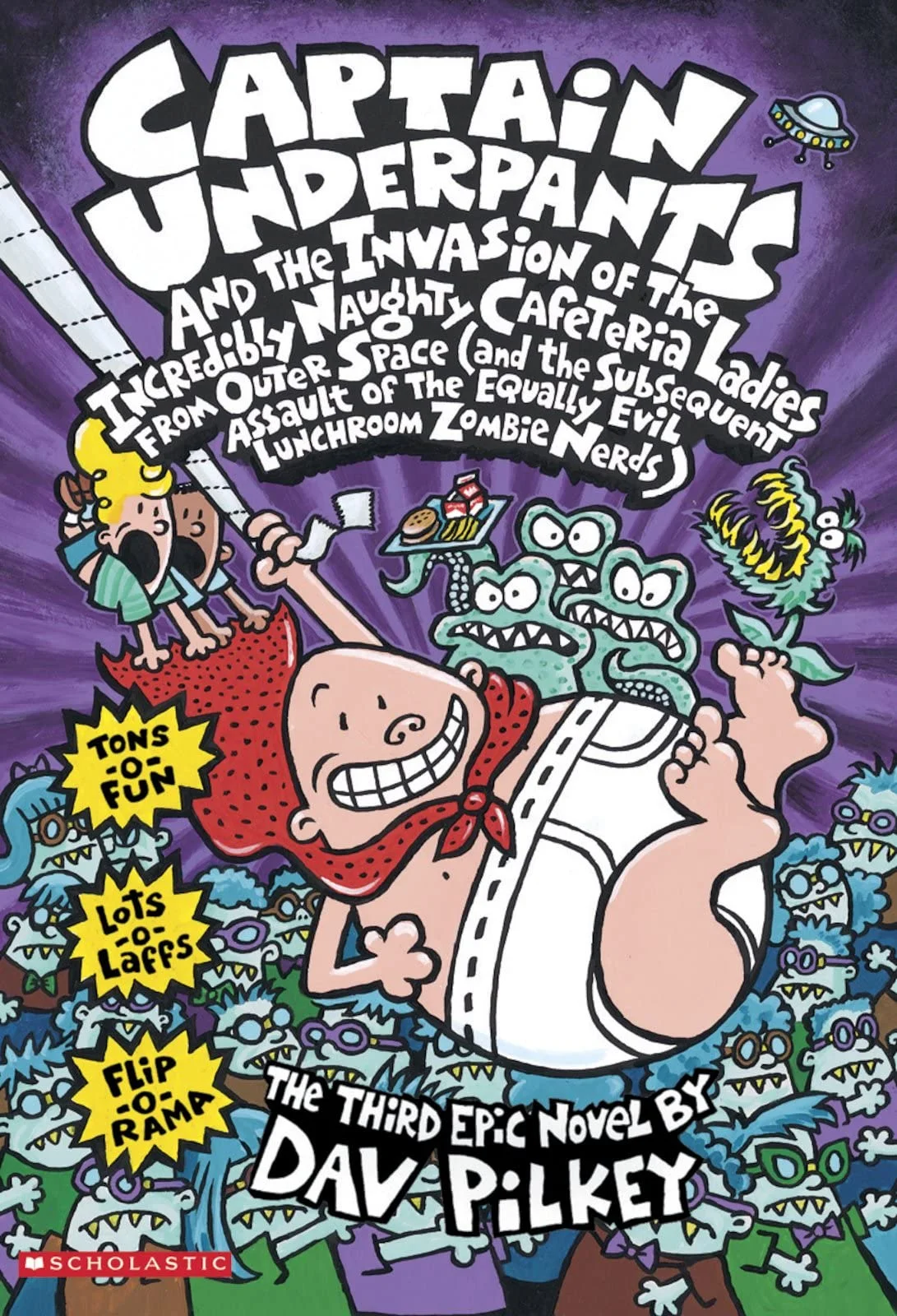
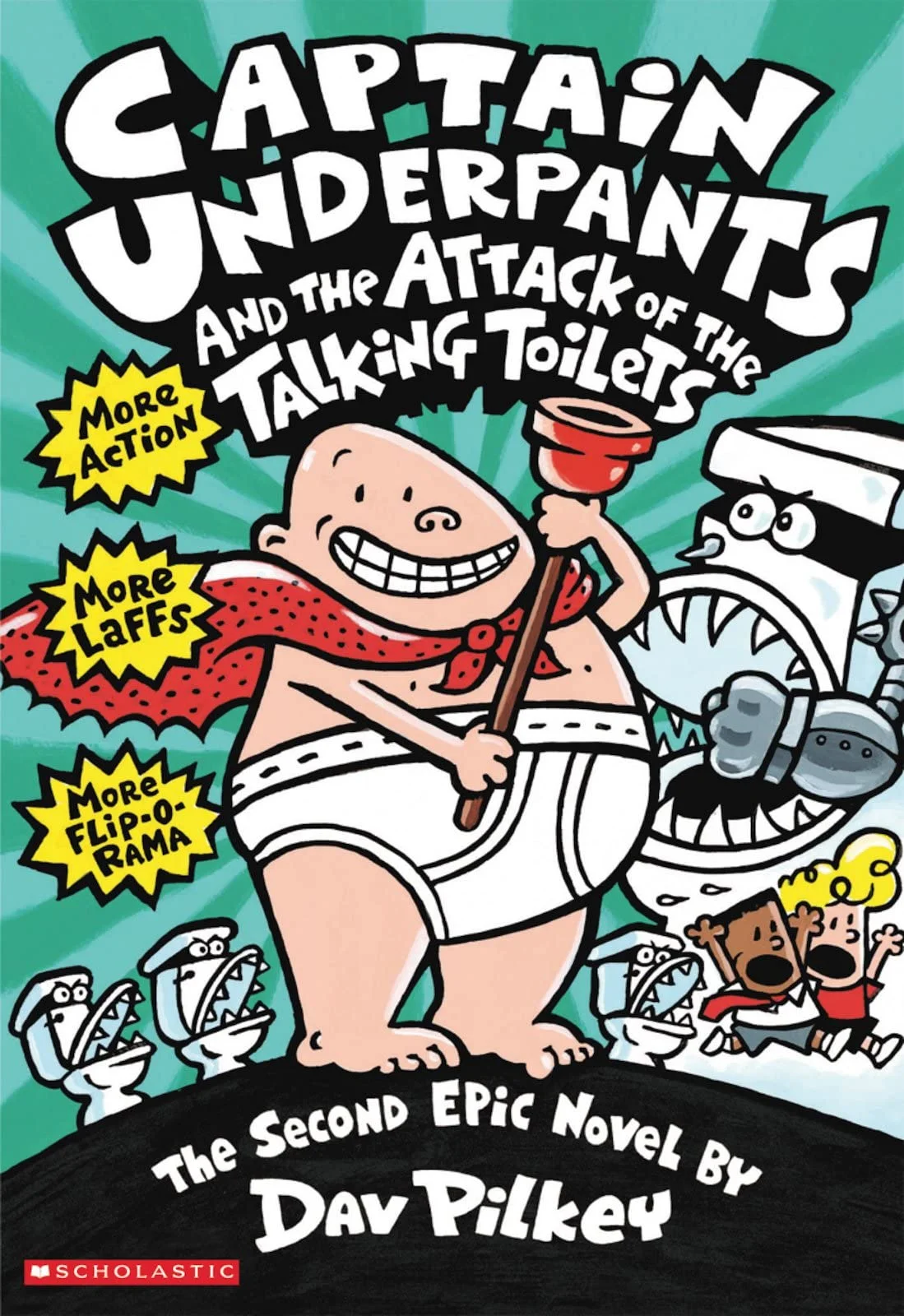
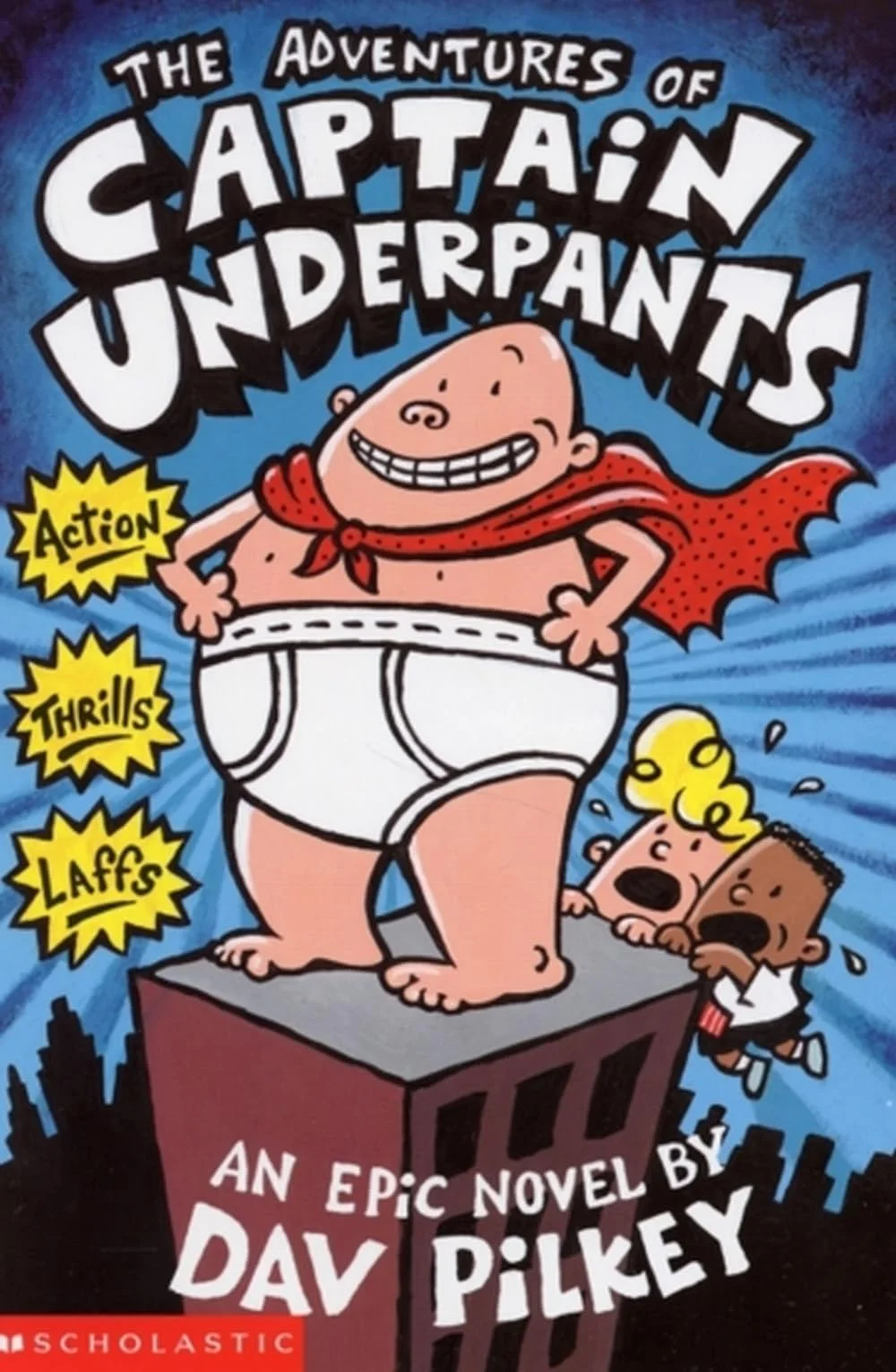
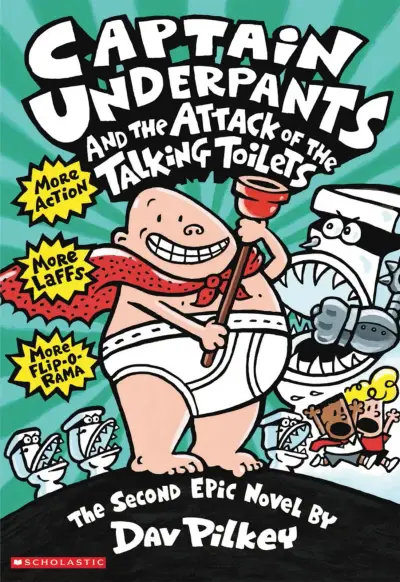
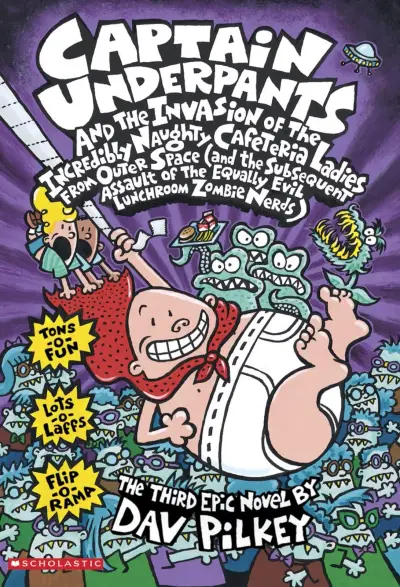
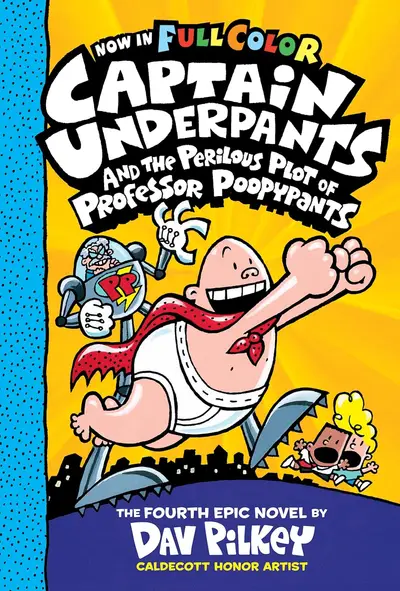
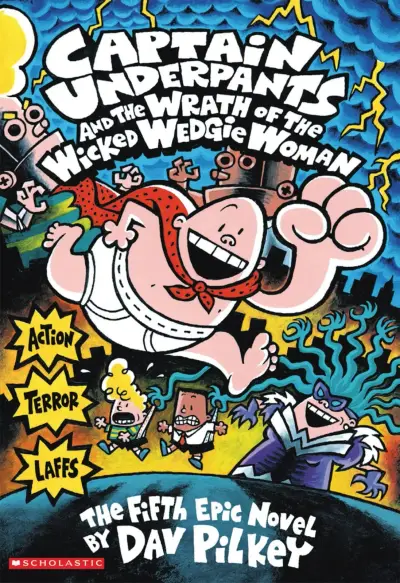
The opening Captain Underpants arc is the strongest entry point and the purest version of the series' appeal. The Adventures of Captain Underpants introduces George and Harold's friendship, comic-making and the hypnotised-headteacher superhero premise. The following books then escalate through talking toilets, alien cafeteria ladies, Professor Poopypants and the Wicked Wedgie Woman. These stories are low sensitivity because the danger is absurd, cartoonish and relentlessly comic. The real parental decision is not fear but taste: children who love toilet humour, pranks and ridiculous villains will be extremely well served.
- IINarrative arcBooks 6–8 · 2003–2008Low sensitivity
Boogers, parallel worlds and bigger continuity
The middle books become more continuity-heavy, with Melvin, the Bionic Booger Boy, Robo-Boogers and parallel-universe potty chaos.
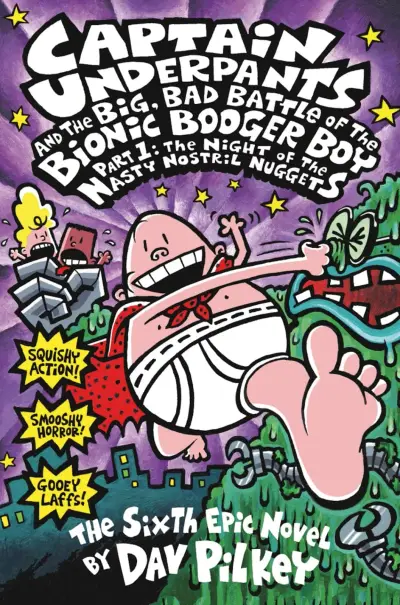
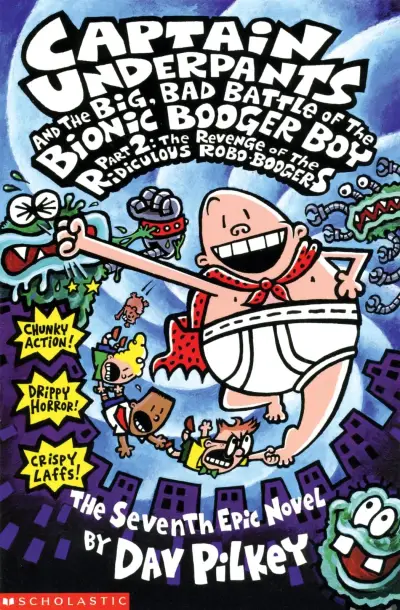
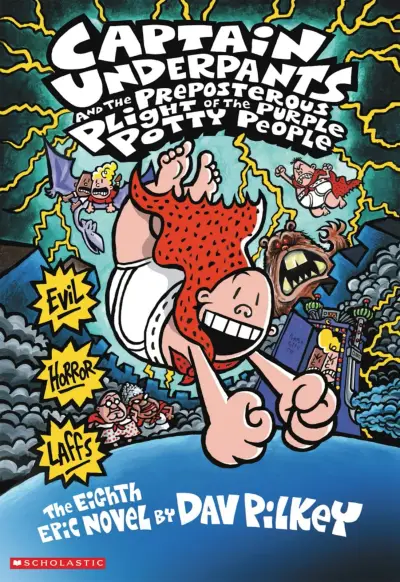
The middle arc is where Captain Underpants becomes a little more serialised. The two Bionic Booger Boy books form a direct two-part story built around Melvin Sneedly, mad inventions, snot humour and Robo-Boogers. The Purple Potty People then pushes the series into parallel universes, evil doubles and more time-machine-style weirdness. The books are still very accessible and very silly, but this stretch is slightly less ideal as a first entry because the reader benefits from already knowing George, Harold, Melvin, Captain Underpants and the series' willingness to treat total nonsense as epic drama.
- IIINarrative arcBooks 9–12 · 2013–2022Moderate sensitivity
Tippy Tinkletrousers and the time-travel finale
The later books add more time travel, school backstory, bullying, apocalyptic silliness and a final gross-out villain.
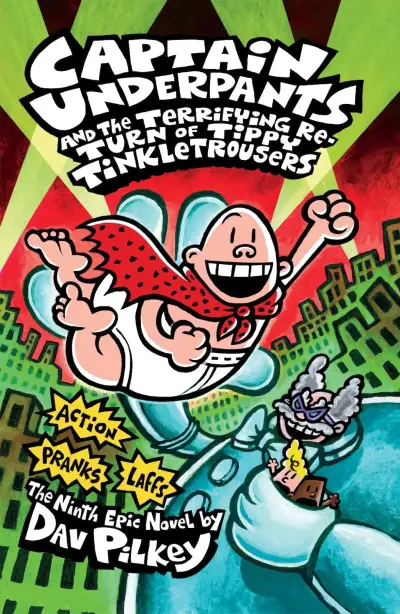
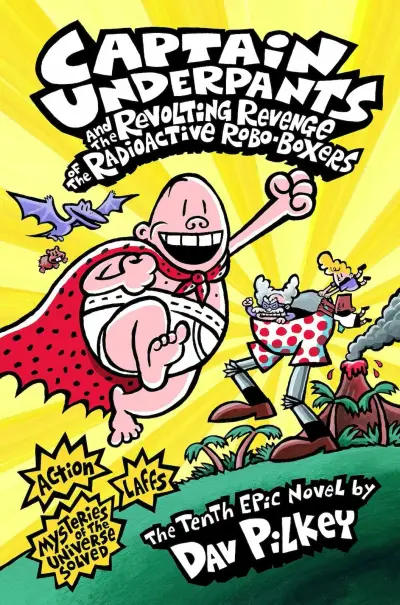
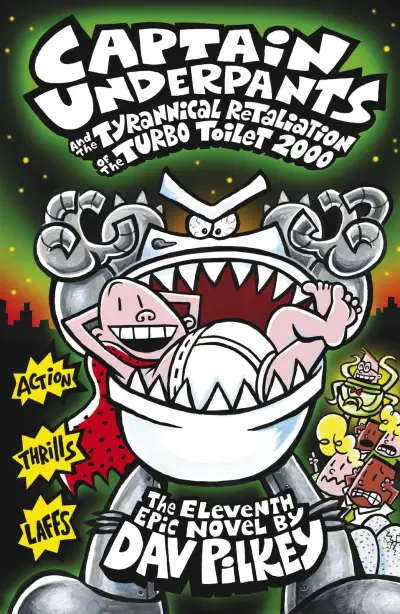
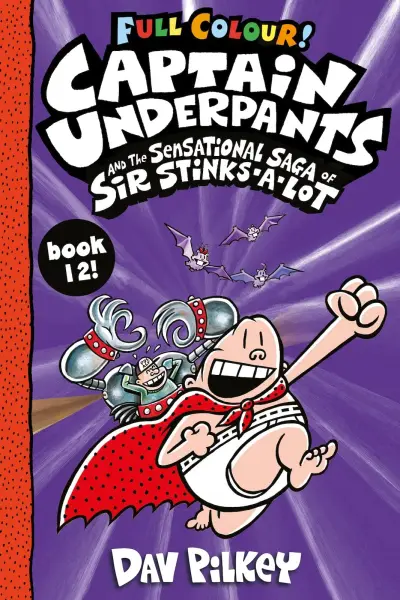
The final arc is the most continuity-led part of Captain Underpants. Tippy Tinkletrousers brings time travel, school backstory and bullying more clearly into view, while Radioactive Robo-Boxers adds alternate-future and post-apocalyptic silliness with a slightly darker visual flavour. Turbo Toilet 2000 returns to classic monster-toilet revenge, and Sir Stinks-A-Lot closes the series with one last gross-out villain and friendship-driven payoff. This arc is still fundamentally comic and low-to-moderate in child impact, but bullying and some scarier imagery are worth flagging for sensitive readers.
Fit check
Right for your reader?
Where the series lands by age
- 1
- 3
- 5
- 7
- 9
- 11
- 13
- 15
- 17
- 19
- Best fit · 7–10
- Read aloud · 6–10
- Independent · 7–10
Reluctant-reader friendliness
Very high
Read-aloud quality
Strong
Adult crossover
High
Grows with the reader
Designed to
Sensitivity envelope
Low overall — with one real jump.
Content notes
- Bullying
- Scary imagery
Per-arc breakdown
Where it sits
In conversation with other series.
Read this after…
Series that pick up where Captain Underpants leaves off.
About the author