- Picture Books
- Ages 3–7
- Comedy
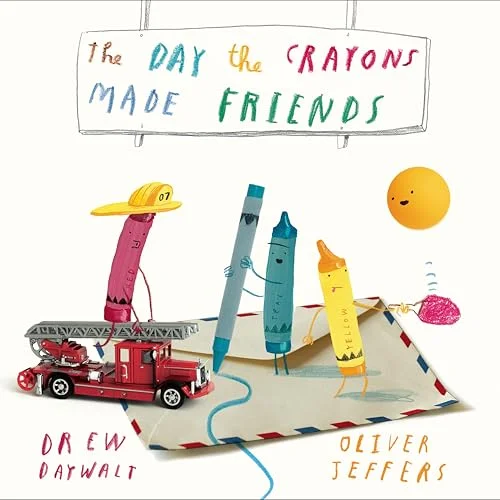
The Day the Crayons Made Friends
Affiliate links — buy through these retailers and we earn a small commission, at no extra cost to you.
Book 3 in The CrayonsView the full series
The crayons are back, and this time they're making new friends. The third book in the series brings fresh colours into the mix and turns Duncan's pencil case into a social event, with all the comedy and warmth the franchise is known for.
- Best for3–7
- FormatPicture
- Length48 pp
- Read aloud~10 min
Affiliate links — buy through these retailers and we earn a small commission, at no extra cost to you.
The vibe
What it’s like.
Style
- Epistolary
- Conversational
- Comedic
Tone
- Funny
- Silly
- Warm
- Irreverent
- Absurdist
Themes
Experience meters
What’s it about?
The story.
Eight years after the original strike, the crayons are ready to expand their circle. The familiar cast from Duncan's box gets new neighbours, new colours, new personalities, new grievances, and the franchise's genius for anthropomorphising art supplies is given fresh material. Daywalt's epistolary format remains intact, with each crayon writing to introduce or respond to the new arrivals, and Jeffers' deadpan illustration style makes every waxy character as visually distinct as ever. The friendship theme gives this third book a slightly warmer emotional register than the first two, and there's an implicit message about making room for people who are different from you that doesn't overstay its welcome. Best read after The Day the Crayons Quit and The Day the Crayons Came Home, though newcomers will find enough to enjoy on its own. A long-awaited return for one of the most loved picture book franchises of the 2010s.
Fit check
Right for your child?
Where it lands by age
- 1
- 3
- 5
- 7
- 9
- 11
- 13
- Best fit · 3–7
- Read aloud · 3–8
- Independent · 5–8
Prose load
Moderate
Visual support
Very high
Reluctant-reader friendly
Very
Read-aloud quality
Excellent
Works well for
- Reading aloud
- Reading together
- Reluctant readers
Nothing in the book is likely to concern most parents. Safe to recommend without preview.
Bedtime suitability
3 / 5 · Workable
Sensitive-child
4 / 5 · Good fit
Graphic intensity
1 / 5 · None
Best for
- Laugh out loud
- Discussion starter
- Gift book
- Read aloud performance
- Art lovers
Avoid if
No common reasons to avoid this one — a rare clean sweep on the sensitivity flags.
Particularly good for children who are…
- Making friends
- Interested in art and creativity
- Reluctant reader
In the classroom
How it works in school.
More from the Crayons — funny read-alouds whose letters and complaints model persuasion and writing in a distinct voice.
A book children love that happens to support school — never a stand-in for the texts a class is taught with. Reviewed for the classroom · June 2026.
Why it lands
Why they love it.
Why kids love it
The specific kick is the new colours arriving — Duncan's familiar crayons getting new neighbours in the box, fresh personalities and fresh grievances, the franchise's letter format extended to making-a-friend negotiations. The third Crayons for any child currently navigating a new friendship group.
- Friendship and belonging
- Trickery and cleverness
- Making a difference
Why parents love it
The third Crayons — Daywalt's epistolary format extended to the new-friends scenario, Jeffers' waxy characters as distinct as ever, the franchise's slightly warmer emotional register here. Best read after Quit and Came Home. Long-awaited return after eight years.
- Shared humour
- Conversation starter
- Quick to read
- Great writing
In the series
The Crayons.
3 books · open the series →
About the creators
About the creators.
If you liked this
Three ways out of this book.
If you liked this, try…
Lateral matches. Same shelf, different texture.
Come into this from…
Easier or preparing reads — perfect lead-ins.
Where to go next…
Escalation reads — a step up in scale, silliness, or stakes.
More like this…
Books that share themes and topics with this one.
Where you’ll find it