- Picture Books
- Ages 3–7
- Comedy
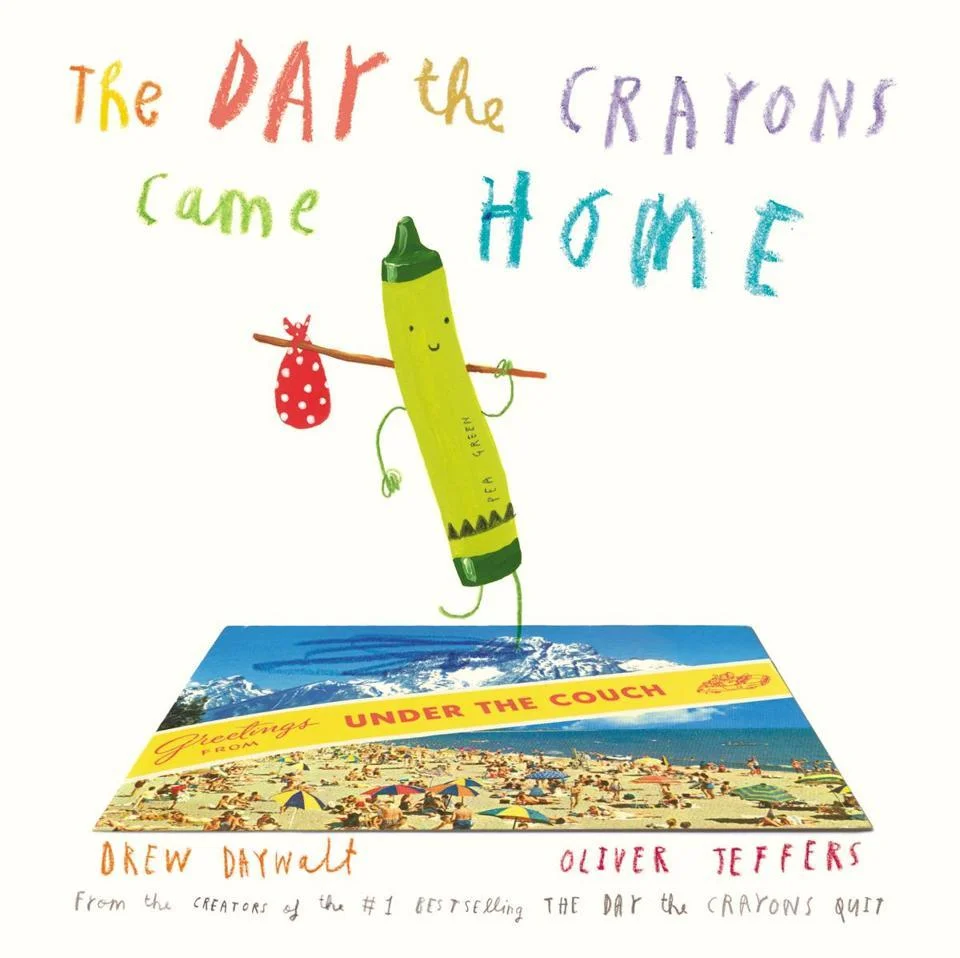
The Day the Crayons Came Home
Affiliate links — buy through these retailers and we earn a small commission, at no extra cost to you.
Book 2 in The CrayonsView the full series
While Duncan's first box of crayons went on strike, these ones got lost, and they've been sending postcards to make sure he knows exactly how abandoned they feel. Every bit as funny as the original, and with a slightly more emotional edge as the crayons plead their cases from various unfortunate locations.
- Best for3–7
- FormatPicture
- Length48 pp
- Read aloud~10 min
Affiliate links — buy through these retailers and we earn a small commission, at no extra cost to you.
The vibe
What it’s like.
Style
- Epistolary
- Conversational
- Comedic
Tone
- Funny
- Silly
- Warm
- Irreverent
- Absurdist
- Thought provoking
Themes
Experience meters
What’s it about?
The story.
This time the crayons haven't quit, they've gone missing. Each one has been lost or left behind somewhere (Maroon under the sofa, Glow-in-the-Dark at the bottom of a bag, Pea Green somewhere Duncan has never even looked), and every one of them has sent a postcard to let Duncan know how they feel about it. The format shifts from letters to postcards, shorter messages, more urgent, and each one rendered in Jeffers' deadpan comic style on an illustrated postcard complete with stamp and postmark. The emotional range here is slightly broader than in the first book: where Quit was largely indignant, the missing crayons have a vein of genuine wistfulness alongside the absurdity. Children who loved the epistolary format of the original will find the postcard premise equally satisfying, and the rescue plot, Duncan has to go and find each one, adds a quest structure that the first book's workplace drama didn't have. Jeffers' visual comedy remains the essential partner to Daywalt's writing, and the book earns its place as a worthy sequel rather than a rehash.
Fit check
Right for your child?
Where it lands by age
- 1
- 3
- 5
- 7
- 9
- 11
- 13
- Best fit · 3–7
- Read aloud · 3–8
- Independent · 5–8
Prose load
Moderate
Visual support
Very high
Reluctant-reader friendly
Very
Read-aloud quality
Excellent
Works well for
- Reading aloud
- Reading together
- Reluctant readers
Nothing in the book is likely to concern most parents. Safe to recommend without preview.
Bedtime suitability
3 / 5 · Workable
Sensitive-child
4 / 5 · Good fit
Graphic intensity
1 / 5 · None
Best for
- Laugh out loud
- Discussion starter
- Gift book
- Read aloud performance
- Art lovers
Avoid if
No common reasons to avoid this one — a rare clean sweep on the sensitivity flags.
Particularly good for children who are…
- Interested in art and creativity
- Reluctant reader
- Anger management
In the classroom
How it works in school.
More from the Crayons — funny read-alouds whose letters and complaints model persuasion and writing in a distinct voice.
A book children love that happens to support school — never a stand-in for the texts a class is taught with. Reviewed for the classroom · June 2026.
Why it lands
Why they love it.
Why kids love it
The specific charm is the postcards — each lost crayon writing in from increasingly tragic locations (Maroon under the sofa, Tan dragged round Egypt in a holiday bag), the format giving each one a distinct illustrated voice. A five-year-old gets the satisfying weirdness of objects with feelings about being abandoned.
- Trickery and cleverness
- Making a difference
- Having a nemesis
- Friendship and belonging
Why parents love it
The Crayons sequel that earns its place — postcard format gives each crayon a distinct visual register, the gags sharper than the original, the rescue-quest plot pulling the book along. Daywalt and Jeffers in full swing. Reliable repeat read-aloud.
- Shared humour
- Conversation starter
- Quick to read
- Great writing
In the series
The Crayons.
3 books · open the series →
About the creators
About the creators.
If you liked this
Three ways out of this book.
If you liked this, try…
Lateral matches. Same shelf, different texture.
Come into this from…
Easier or preparing reads — perfect lead-ins.
Where to go next…
Escalation reads — a step up in scale, silliness, or stakes.
More like this…
Books that share themes and topics with this one.